Firebase Alternatives: 9 Backend Platforms Compared (2026)
Firebase gives you a backend without running servers: a database (Firestore or Realtime Database), authentication, file storage, Cloud Functions, and hosting, all from Google. Teams look for Firebase alternatives for a few recurring reasons: Firestore is a document database that makes relational data and reporting hard, the pay-as-you-go Blaze plan has no hard spending cap, Cloud Storage now requires Blaze, and everything ties you to Google. This guide covers what changed in Firebase recently, which part of Firebase each alternative replaces, and nine alternatives with pricing checked on each vendor’s site in November 2026.
TL;DR
- Best overall: Supabase. Postgres, auth, storage, realtime, and edge functions in one open-source platform, free for two projects, Pro from $25 a month.
- Most complete like-for-like: Appwrite, open source with databases, auth, storage, functions, messaging, and site hosting.
- Simplest replacement for Firebase Hosting: Static.app, for static sites, from $6 a month with unlimited traffic.
- Best developer experience for realtime apps: Convex, a reactive TypeScript backend.
- Best free self-hosted option: PocketBase, a single file you run on your own server.
What changed in Firebase
A few recent changes have pushed teams to look around:
- Cloud Storage needs the Blaze plan. Since February 3, 2026, projects on the free Spark plan can’t read or write any Cloud Storage bucket, including old default buckets. The files are kept but are unreachable until you upgrade.
- Blaze has no hard cap. Budget alerts warn you, but they don’t stop charges, so a bug or a traffic spike can produce a large bill.
- Firestore is NoSQL. There are no joins, and reporting across collections means copying data around or exporting to BigQuery. Firebase now offers SQL Connect (formerly Data Connect) with Postgres on Cloud SQL, but it is a separate product with its own instance cost, from about $9.37 a month after a trial.
- Lock-in. Firestore, Firebase Auth, and security rules don’t exist outside Google, so moving later means rewriting data access and rules.
What still works well: the free Spark plan includes 1 GiB of Firestore storage, 50K reads and 20K writes a day, and 50K monthly active users on Auth, and Firebase’s mobile SDKs, offline support, and Crashlytics remain excellent.
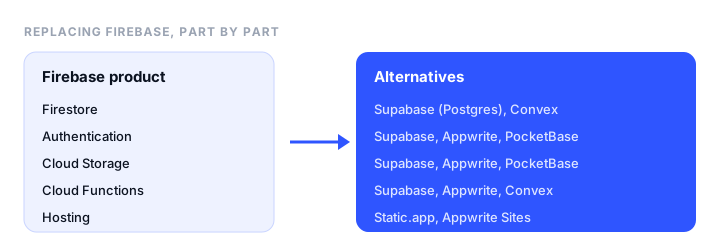
Which part of Firebase do you need to replace?
| Firebase product | Replace with |
|---|---|
| Firestore / Realtime Database | Supabase, Appwrite, Convex, PocketBase, Nhost, Neon |
| Authentication | Supabase, Appwrite, PocketBase, Nhost, or an auth service such as Clerk |
| Cloud Storage | Supabase, Appwrite, PocketBase, Nhost |
| Cloud Functions | Supabase Edge Functions, Appwrite Functions, Convex, Nhost |
| Hosting | Static.app, or see our Firebase Hosting alternatives |
Firebase alternatives at a glance
| Tool | Database | Free tier | Paid from | Open source / self-host | Best for |
|---|---|---|---|---|---|
| Supabase | Postgres | 2 projects, 500 MB DB, 50K MAU | $25/mo | Yes (Apache-2.0) | Best overall |
| Appwrite | Document-style on SQL | 2 projects, 75K MAU | $25/mo | Yes (BSD-3) | Full Firebase replacement |
| Static.app | None (static hosting) | 7-day trial | $6/mo | No | Replacing Firebase Hosting |
| Convex | Reactive document-relational | 1M function calls, 0.5 GB | $25 per developer/mo | Source-available (FSL) | Realtime TypeScript apps |
| PocketBase | SQLite | Free (self-hosted) | Your server | Yes (MIT) | Small self-hosted apps |
| Nhost | Postgres + GraphQL | 1 project, 1 GB DB | $25/mo | Yes (MIT) | GraphQL backends |
| AWS Amplify | DynamoDB + GraphQL | AWS free credits | Pay per AWS service | Partly | Teams on AWS |
| Back4App | MongoDB (Parse) | 25K requests/mo | $15/mo per app yearly | Parse Server (Apache-2.0) | Parse developers |
| Neon | Postgres | 100 projects, 1 GB each | Usage-based, no minimum | Yes (Apache-2.0) | Serverless Postgres |
Free tiers are summarized; see each review for exact limits.
The best Firebase alternatives, reviewed
1. Supabase: best overall Firebase alternative
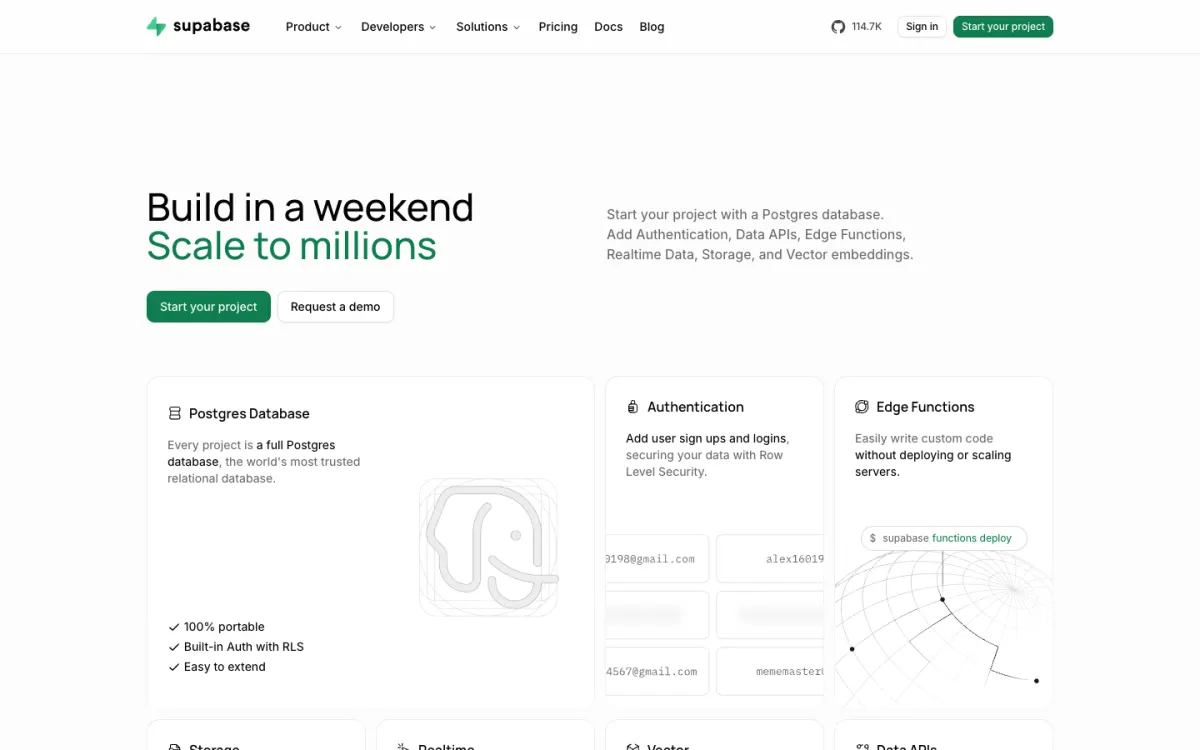
What it is. An open-source backend built on Postgres: database, auth, file storage, realtime subscriptions, edge functions, and vector search, with an auto-generated API.
Why it replaces Firebase. It covers every Firebase backend product, and your data lives in standard Postgres, so it’s portable with pg_dump and works with any SQL tool. Row Level Security plays the role of Firebase security rules. Supabase also publishes a Firestore-to-Postgres migration tool.
Pricing. Free for 2 active projects with a 500 MB database, 1 GB of file storage, 5 GB of egress, and 50K monthly active users. Pro is $25 a month per organization with a $10 compute credit, 8 GB of disk, 100K MAU, and a spending cap that’s on by default.
The catch. Free projects pause after a week without activity (you can restore them), and each extra project on Pro needs its own compute, from $10 a month. Our Supabase alternatives guide covers when it isn’t the right fit.
2. Appwrite: most complete Firebase replacement
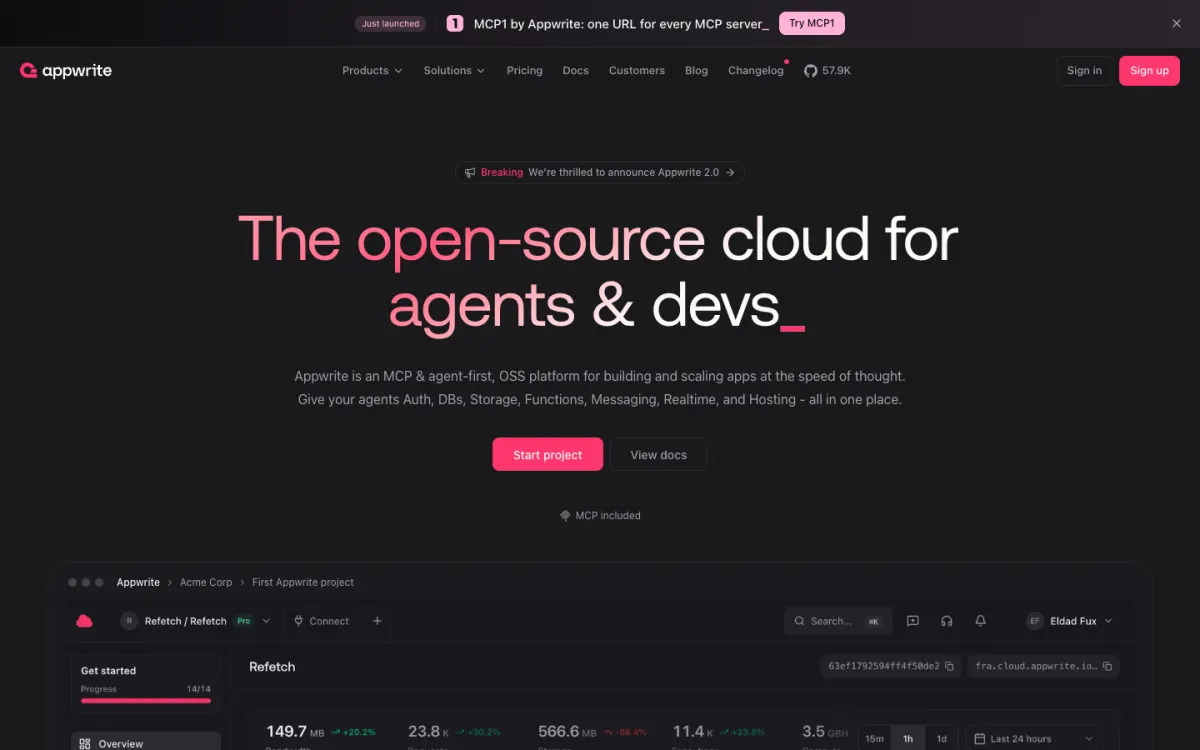
What it is. An open-source backend platform with databases, auth, storage, functions, realtime, messaging (email, SMS, push), and its own site hosting, called Sites.
Why it replaces Firebase. It’s the only option here that replaces both the backend and the hosting in one place, and it runs on Appwrite Cloud or your own servers under the BSD-3 license. Its migration tool imports Firebase users and top-level Firestore documents.
Pricing. The free plan includes 2 projects per organization, 75K monthly users, 2 GB of storage, and 5 GB of bandwidth. Pro is $25 a month with a budget cap.
The catch. Free projects pause after 7 days without development activity and are deleted if they stay paused for 90 days. Hitting a free limit makes the project read-only until the month resets.
3. Static.app: simplest replacement for Firebase Hosting
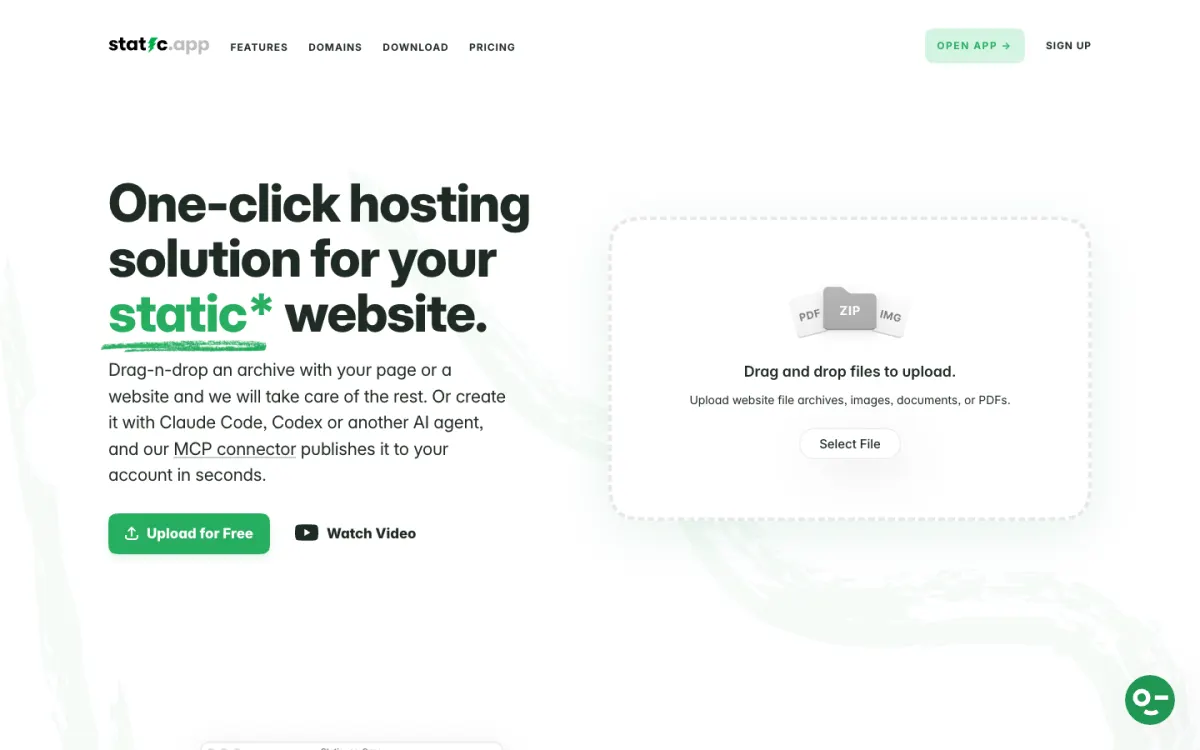
What it is. A static website host where you publish by dragging a folder or ZIP into the dashboard, with free SSL, forms, cookieless analytics, and password-protected pages.
Why it replaces Firebase. It replaces the Hosting part of Firebase only, and for many projects that’s the part that matters: a marketing site, a landing page, or a single-page app that calls its backend through an API. Pricing is flat with unlimited traffic, so there’s no Spark limit to hit and no metered Blaze bill. Its built-in forms also replace the Cloud Function many sites only kept for a contact form.
Pricing. A 7-day free trial without a card. Starter is $6 a month, or $5 billed yearly, for 2 sites and custom domains. Medium is $12 for 7 sites, and Large $18 for 30.
The catch. Static only: there’s no database, auth, or server code, so pair it with Supabase, Appwrite, or Convex for the backend. Our Firebase Hosting alternatives guide compares it with Cloudflare, Netlify, and Vercel.
4. Convex: best for realtime TypeScript apps
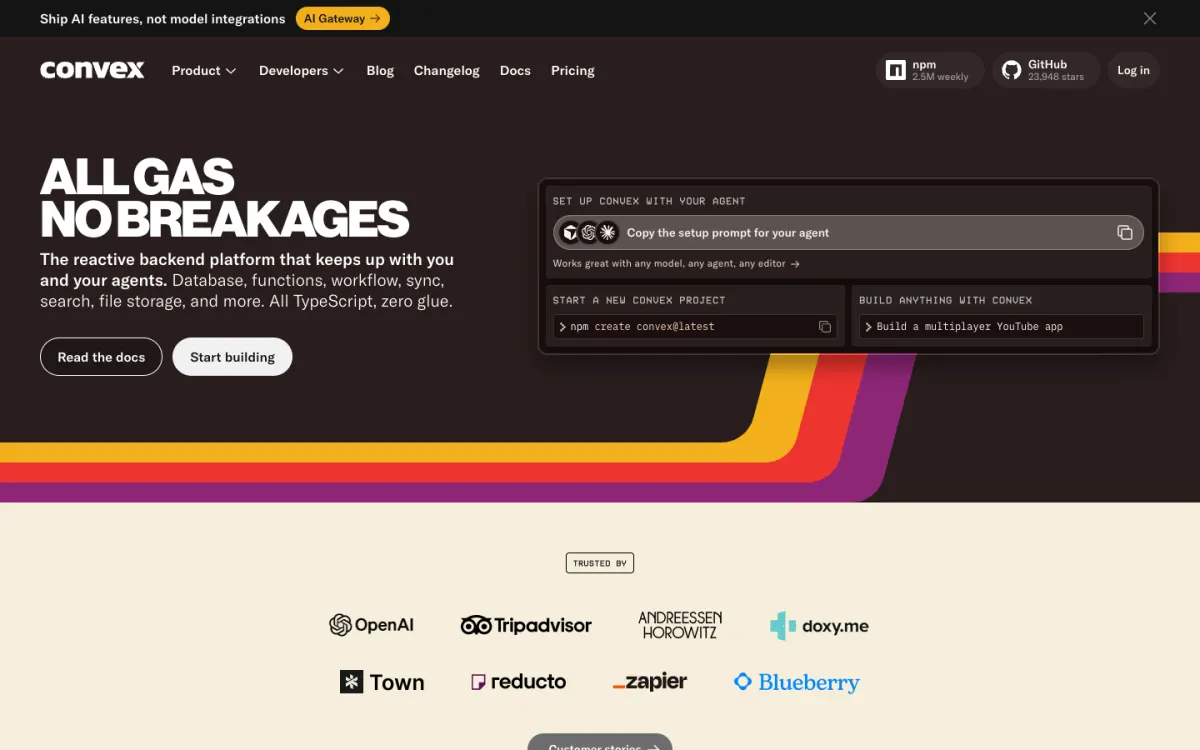
What it is. A reactive backend where your queries, mutations, and server functions are TypeScript files, and every query updates the client automatically when data changes.
Why it replaces Firebase. It keeps Firestore’s best feature, live updates without wiring listeners, and adds transactions, relational queries, and end-to-end types. There are no security rules to write, because access checks are ordinary code in your functions.
Pricing. Free for up to 6 developers with 1M function calls, 0.5 GB of database, and 1 GB of files a month. Professional is $25 per developer a month plus usage.
The catch. It’s a new programming model to learn, and the backend is source-available under the FSL license rather than fully open source, though it can be self-hosted.
5. PocketBase: best free self-hosted option
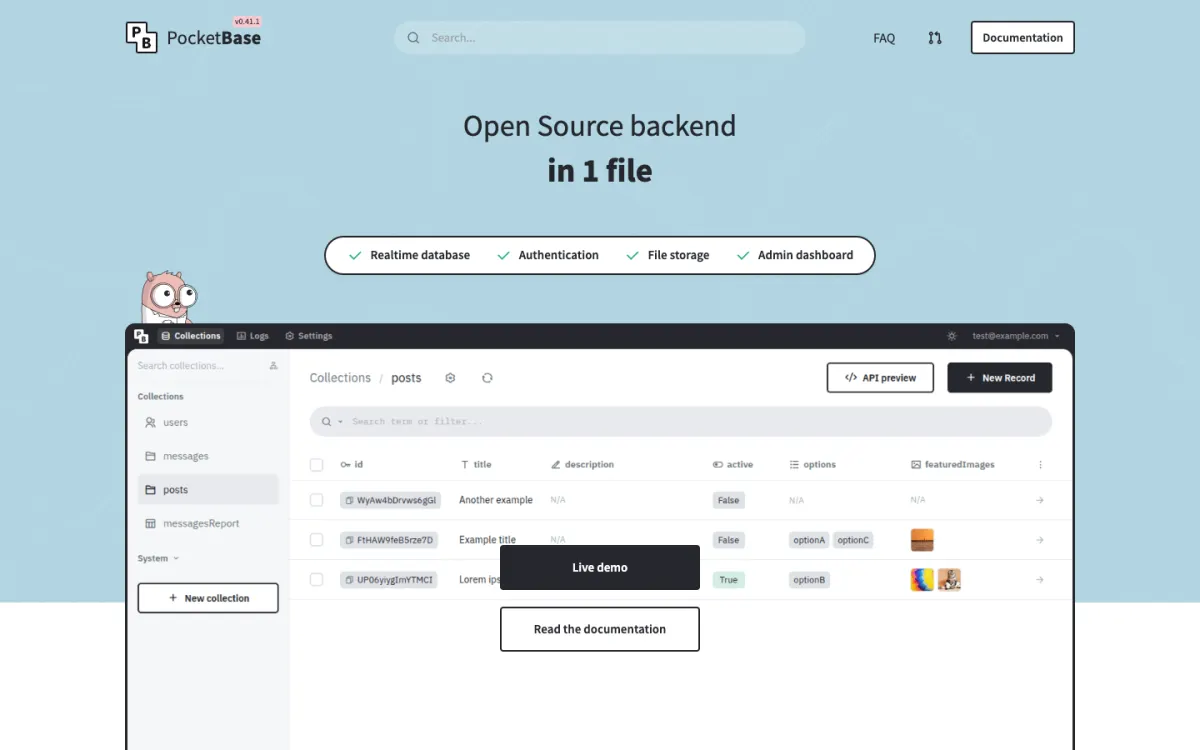
What it is. A complete backend in one executable: an embedded SQLite database, realtime subscriptions, auth with email and OAuth, file storage on disk or S3, and an admin dashboard.
Why it replaces Firebase. You download one file, run it on a small server, and you have a backend with no bill beyond the server. It’s MIT-licensed.
Pricing. Free. You pay only for your server.
The catch. There’s no official hosted version, so backups and uptime are yours. It’s still before version 1.0, and its own docs warn that upgrades can break things. The project also moved its code off GitHub in October 2026 to its author’s own server.
6. Nhost: best for GraphQL
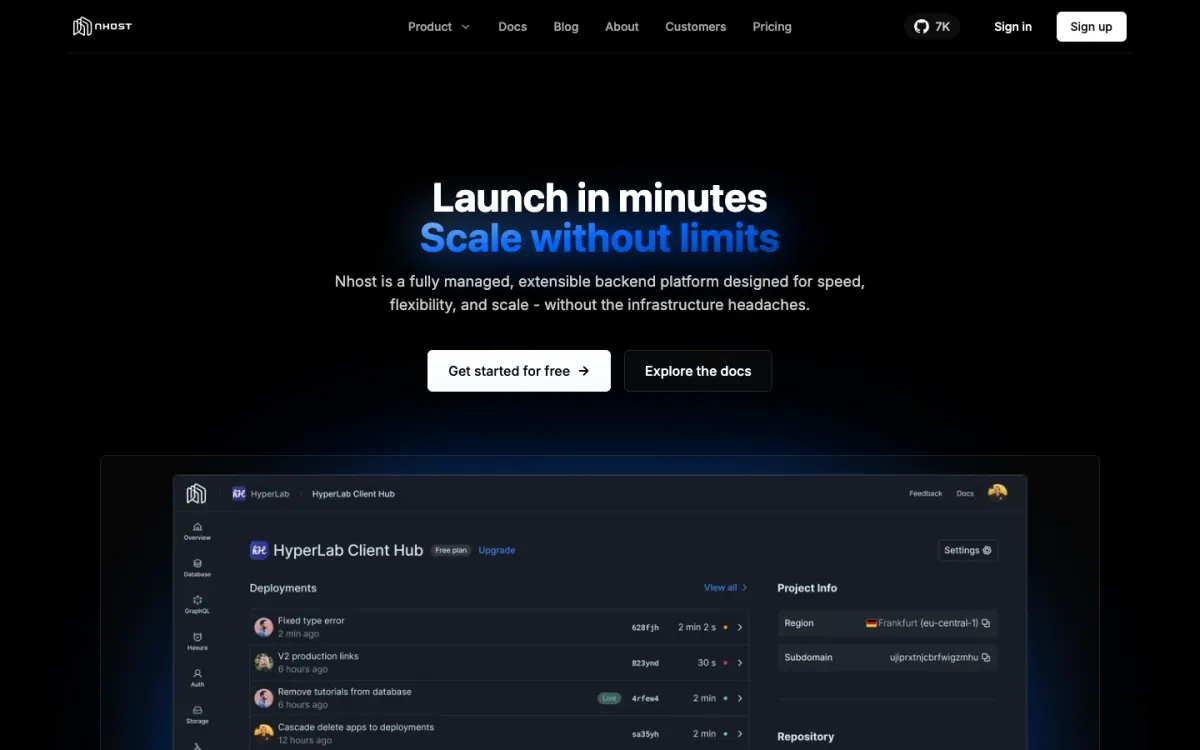
What it is. An open-source backend with Postgres, a Hasura GraphQL API with realtime subscriptions, auth, storage, and functions.
Why it replaces Firebase. If you want a typed GraphQL API over relational data instead of Firestore queries, Nhost gives you one with permissions per role.
Pricing. The free Starter plan includes 1 project with a 1 GB database and 1 GB of storage. Pro is $25 a month with a $15 compute credit.
The catch. Free projects pause after a week without activity, and you need to know GraphQL and Hasura’s permission model.
7. AWS Amplify: best for teams on AWS
What it is. AWS’s framework for app backends: Amplify Gen 2 defines auth (Cognito), a realtime GraphQL API (AppSync), a database (DynamoDB), functions (Lambda), and storage (S3) in TypeScript.
Why it replaces Firebase. For a company already on AWS, it gives a Firebase-like developer experience on top of services you already use, with AWS’s compliance and regions.
Pricing. You pay each AWS service’s own rates. New AWS accounts get free credits, and Amplify Hosting has a free allowance for 12 months.
The catch. It’s AWS: billing is spread across many services, and DynamoDB is a NoSQL database with its own modeling rules.
8. Back4App: best for Parse developers
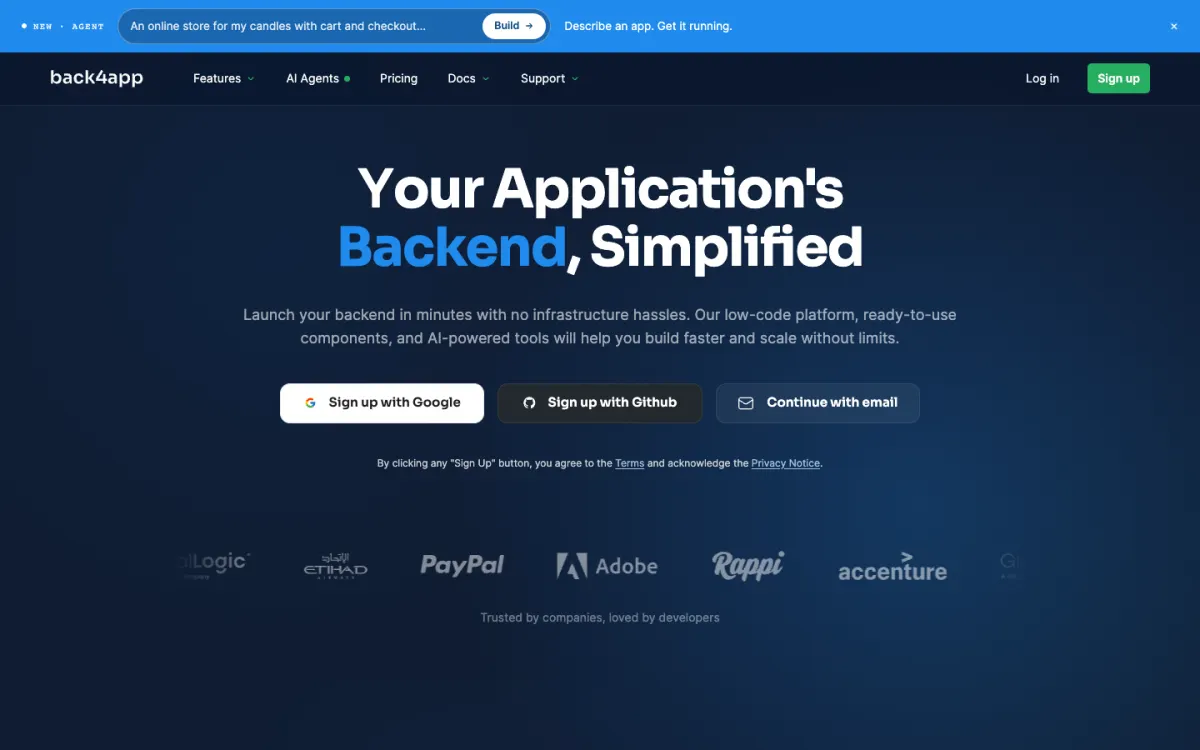
What it is. Hosted Parse Server: a MongoDB database, live queries, auth, file storage, and Cloud Code functions in JavaScript.
Why it replaces Firebase. Parse is the original open-source mobile backend, so its SDKs are mature, and because Parse Server is open source (Apache-2.0), you can move off Back4App to your own server later.
Pricing. Free for 25K requests a month with a 250 MB database. MVP is $15 a month per app billed yearly.
The catch. The free plan is small, and Parse’s ecosystem is older than Supabase’s or Appwrite’s.
9. Neon: best serverless Postgres
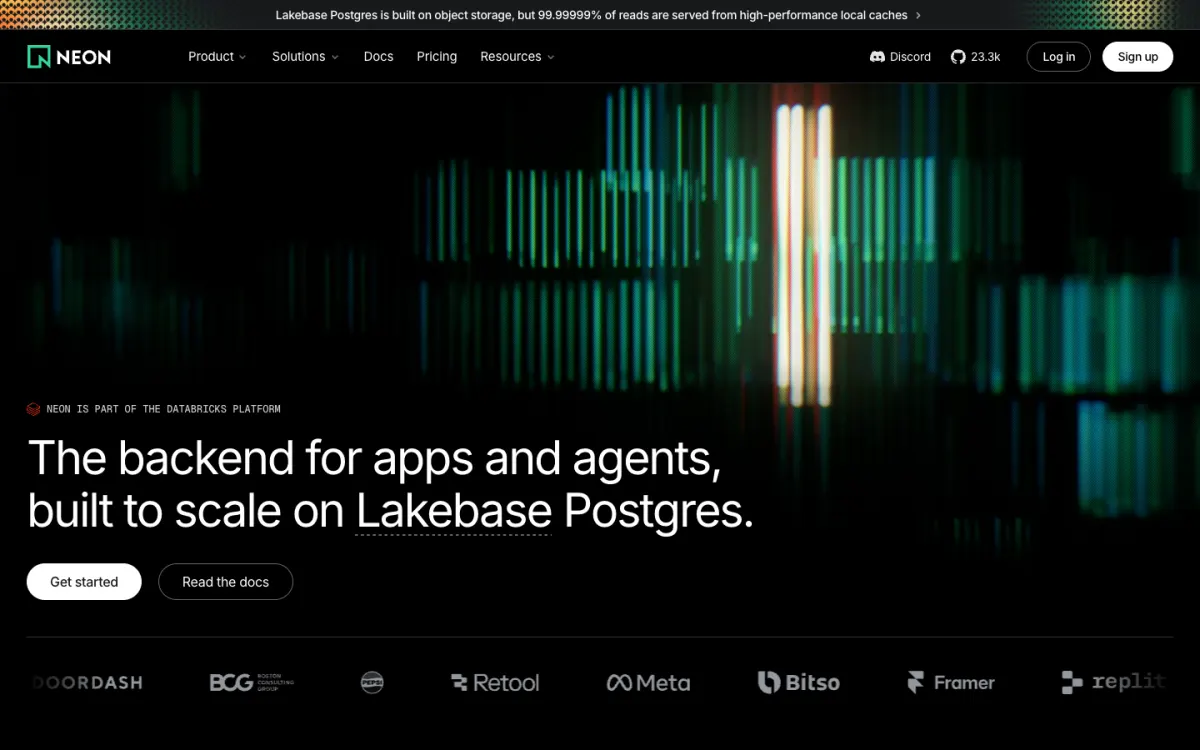
What it is. Serverless Postgres with instant branching and scale-to-zero, now part of Databricks, with auth and object storage added to its platform.
Why it replaces Firebase. If your main problem with Firebase is Firestore, Neon gives you a real Postgres database you pay for only while it runs, with a branch per pull request for testing.
Pricing. Free for 100 projects with 100 compute-hours each a month and 1 GB of storage per project. Paid usage has no monthly minimum, from $0.106 per compute-hour.
The catch. It’s mostly a database, so you’ll add your own API layer and file storage, or pair it with an auth service.
Which Firebase alternative should you choose?
- You want the closest all-round replacement on open source: Supabase.
- You want backend and hosting from one vendor: Appwrite.
- You only used Firebase Hosting: Static.app for static sites.
- You loved Firestore’s live updates: Convex.
- You want to self-host for free: PocketBase.
- You want GraphQL: Nhost.
- Your company runs on AWS: Amplify.
One more option has dropped out: InstantDB, a popular realtime database, closed new sign-ups in 2026 and will shut down its hosted service on August 31, 2027.
How to move off Firebase
- Export Firestore. Use the managed export to a Cloud Storage bucket, or the Supabase migration tool, which converts collections to Postgres tables.
- Export users.
firebase auth:exportwrites users with password hashes. Supabase and Appwrite can import Firebase’s modified scrypt hashes, so users keep their passwords. - Rewrite security rules as Postgres Row Level Security policies, Appwrite permissions, or checks in your Convex functions.
- Move files from Cloud Storage with
gsutilor a script, keeping the same paths. - Run both for a while, writing to the new backend and reading from both, before turning Firebase off.
FAQ
What is the best alternative to Firebase?
Supabase is the best overall alternative: it covers Firebase’s database, auth, storage, realtime, and functions on open-source Postgres, with a free tier and Pro from $25 a month. Appwrite is the most complete like-for-like replacement, including hosting, and Convex suits realtime TypeScript apps.
Is there an open-source alternative to Firebase?
Yes. Supabase (Apache-2.0), Appwrite (BSD-3), PocketBase (MIT), Nhost (MIT), and Parse Server (Apache-2.0) are all open source and can be self-hosted. Convex’s backend is source-available and can also be self-hosted.
Is Supabase better than Firebase?
For relational data, SQL reporting, and avoiding lock-in, yes: Supabase runs on standard Postgres, while Firestore is a proprietary document database. Firebase is still stronger for mobile apps that need offline sync and tools like Crashlytics and Remote Config.
Is Firebase free?
The Spark plan is free with daily limits, such as 50K Firestore reads and 20K writes a day and 50K monthly active users on Auth. Since February 2026, Cloud Storage needs the pay-as-you-go Blaze plan, which has free allowances but no hard spending cap.
What can I use instead of Firebase Hosting?
For static sites, Static.app is the simplest replacement, with flat pricing and unlimited traffic. Cloudflare Pages, Netlify, and Vercel also host static sites and add server functions. Our Firebase Hosting alternatives guide compares them in detail.
Build your Bootstrap theme
Design a custom Bootstrap 5 theme visually with a live preview, then export clean Sass or CSS.
Open the Builder