Open-Source Web Analytics: 9 Self-Hosted Tools Compared
Open-source web analytics tools let you see your traffic without sending visitor data to Google: you can read the code, run it on your own server, and keep every pageview in a database you control. Most of them are cookieless too, so they don’t need a consent banner. This guide compares nine open-source analytics tools, with their licenses, what it takes to host them, what the self-hosted versions leave out, and the hosted plans if you’d rather not run a server. Versions and prices were checked in November 2026.
TL;DR
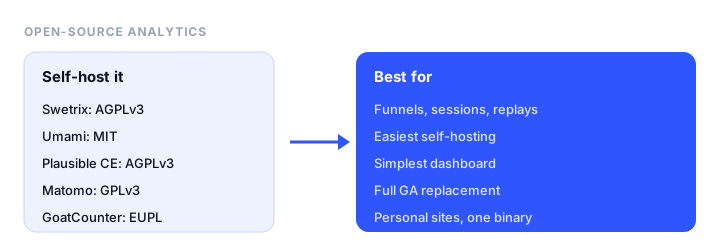
- Best overall: Swetrix. AGPLv3, cookieless, with funnels, sessions, error tracking, performance data, and session replay that the Community Edition stores in your own storage.
- Easiest to self-host: Umami, MIT-licensed, with Node.js and PostgreSQL and every report included.
- Simplest dashboard: Plausible Community Edition.
- Most features, Google Analytics style: Matomo.
- Product analytics: PostHog, if you have a large server, or OpenPanel.
- Smallest setup: GoatCounter, a single Go binary.
Open-source web analytics at a glance
| Tool | License | GitHub stars | Self-hosted stack | Hosted plan | Best for |
|---|---|---|---|---|---|
| Swetrix | AGPLv3 | Not shown | Docker Compose | From €17/mo | Funnels, sessions, errors, replays |
| Umami | MIT | About 40,000 | Node.js 20.19+, PostgreSQL 12.14+ | Free for 100K events, Pro $20/mo | Easiest self-hosting |
| Plausible CE | AGPLv3 | About 29,800 | Docker, 2 GB RAM, CPU with SSE 4.2 or NEON | From $9/mo | Simplest dashboard |
| Matomo | GPLv3 | About 22,000 | PHP and MySQL or MariaDB | From about €29/mo | Full Google Analytics replacement |
| PostHog | MIT (self-hosted) | Not shown | Docker Compose, 4 vCPU, 16 GB RAM | Free tier, usage pricing | Product analytics and replays |
| Rybbit | AGPLv3 | About 13,300 | Docker | From $13/mo yearly | Funnels, journeys, Web Vitals |
| OpenPanel | AGPLv3 | About 7,300 | Docker | From $2.50/mo | Product analytics on a budget |
| GoatCounter | EUPL | Not shown | Single Go binary, SQLite or PostgreSQL | Free hosted | Personal sites and blogs |
| Ackee | MIT | Not shown | Node.js and MongoDB | None | Minimal self-hosted stats |
Star counts are rounded, from each project’s GitHub page in November 2026.
What “open source” means for analytics
- You can self-host it. The data stays on your server, which is the strongest privacy and compliance position.
- The license matters. MIT (Umami, Ackee) lets you do almost anything with the code. AGPLv3 (Swetrix, Plausible, Rybbit, OpenPanel) requires you to share changes if you offer a modified version as a service. For running analytics on your own sites, both are fine.
- Self-hosted editions can differ from the cloud. Plausible’s and some others’ free editions leave out features that the paid cloud includes. The reviews below list what’s missing.
- Self-hosting isn’t free of cost. You pay for the server, and you handle updates, backups, and security fixes.
The best open-source web analytics tools, reviewed
1. Swetrix: best overall

What it is. A cookieless analytics platform with a traffic dashboard, events and goals, funnels, sessions with anonymous user profiles, error tracking, real-user performance timings, revenue analytics, and session replay. Data on the cloud version is stored in the EU.
Self-hosting. The Community Edition runs with Docker Compose, and the latest release is 5.5.3. Session replays are recorded to storage you provide, so the recordings stay on your infrastructure too.
Hosted plan. Standard from €17 a month and Plus from €35, with 17% off yearly and a 14-day trial.
The catch. It’s a larger system than Umami or GoatCounter, and its tracking script is about 6.7 KB compressed.
2. Umami: easiest to self-host
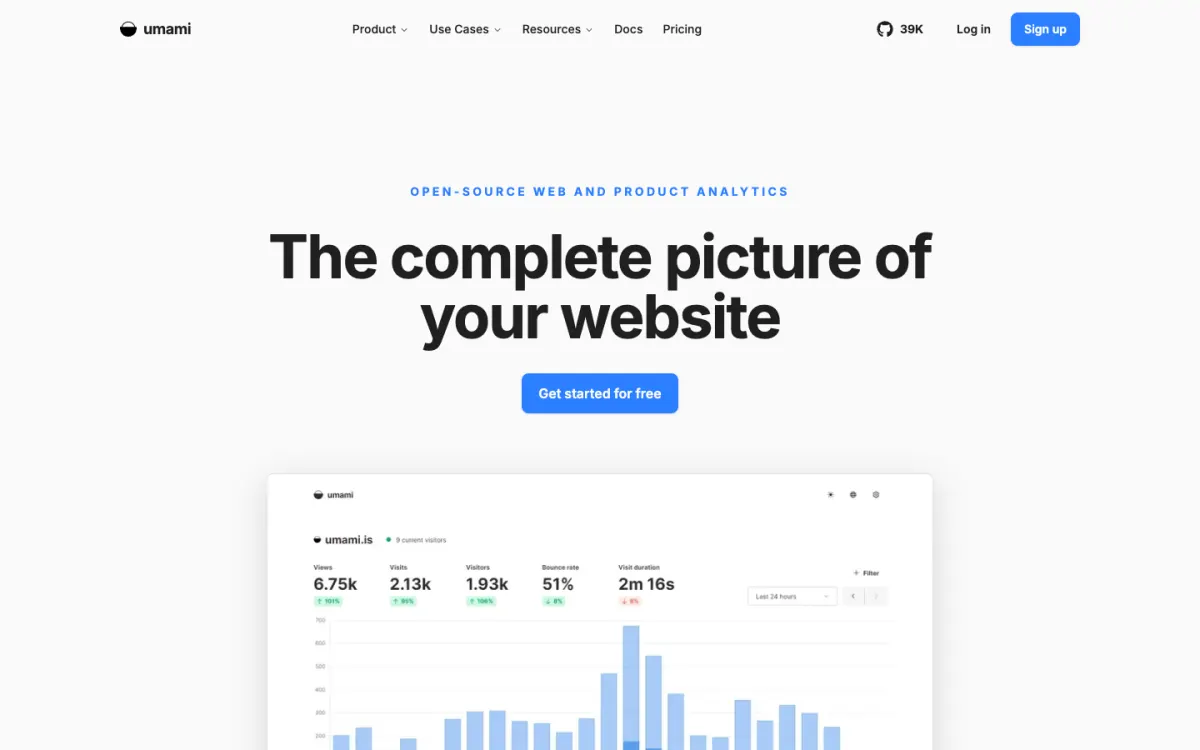
What it is. The most popular open-source analytics tool on GitHub, with a clean dashboard, funnels, retention, journeys, goals, revenue reports, and real-user Web Vitals.
Self-hosting. It needs Node.js 20.19 or later and PostgreSQL 12.14 or later, and runs well on a small server or a Docker host. The current version is 3.5.0, and the self-hosted version includes every report, under the permissive MIT license.
Hosted plan. The cloud Hobby plan is free for 100K events a month on one site. Pro is $20 a month for 1M events and 20 sites.
The catch. Session replay and heatmaps are on the $200 Business cloud plan.
3. Plausible Community Edition: simplest dashboard
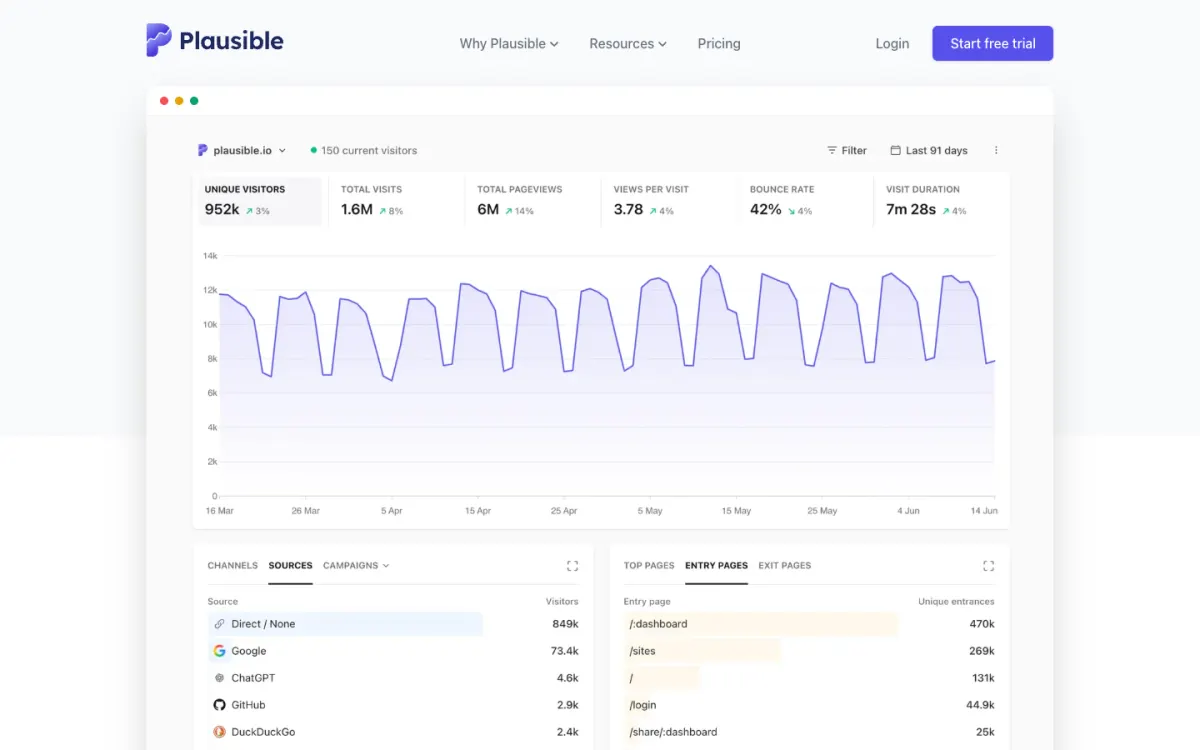
What it is. The self-hosted edition of Plausible, the best-known privacy-first analytics tool, with a one-page dashboard and a tracking script of about 1.3 KB compressed.
Self-hosting. It runs with Docker and needs at least 2 GB of RAM and a CPU with SSE 4.2 or NEON support, which rules out some older and very cheap servers. The current version is 3.2.1.
Hosted plan. From $9 a month for 10K pageviews, with a 30-day trial.
The catch. The Community Edition leaves out funnels, user journeys, ecommerce revenue, SSO, the Sites API, and the Looker Studio connector, which are only in Plausible’s cloud. See our Plausible alternatives.
4. Matomo: the full Google Analytics replacement

What it is. The longest-running open-source analytics platform, with goals, ecommerce, segments, a tag manager, a cookieless mode, and a Google Analytics importer.
Self-hosting. It’s a PHP application with MySQL or MariaDB, so it runs on almost any web host. The current version is 5.14.2.
Hosted plan. Matomo Cloud starts at about €29 a month for 50K hits.
The catch. Funnels, heatmaps, session recordings, and A/B testing are paid plugins on the self-hosted version, and the interface is far more complex than the others here.
5. PostHog: product analytics, if you have the server
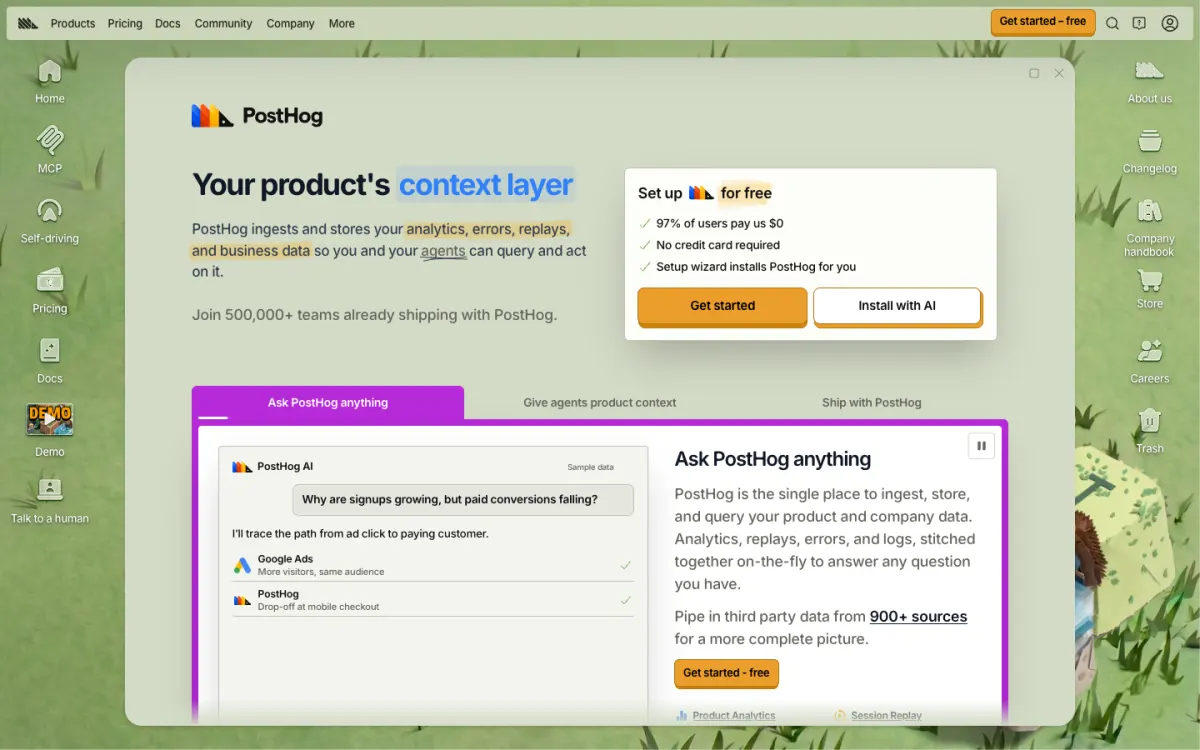
What it is. A product analytics platform with web analytics, funnels, session replay, feature flags, experiments, and surveys.
Self-hosting. The free Docker Compose deployment is MIT-licensed but needs at least 4 vCPUs, 16 GB of RAM, and 30 GB or more of disk, and PostHog doesn’t officially support it. PostHog suggests moving to its cloud above about 300K events a month.
Hosted plan. The cloud has a free tier of 1M events and 5K session replays a month, then usage-based pricing.
The catch. It’s heavy to host, and it uses cookies by default, so you’ll likely need a consent banner.
6. Rybbit: funnels and journeys, newest option
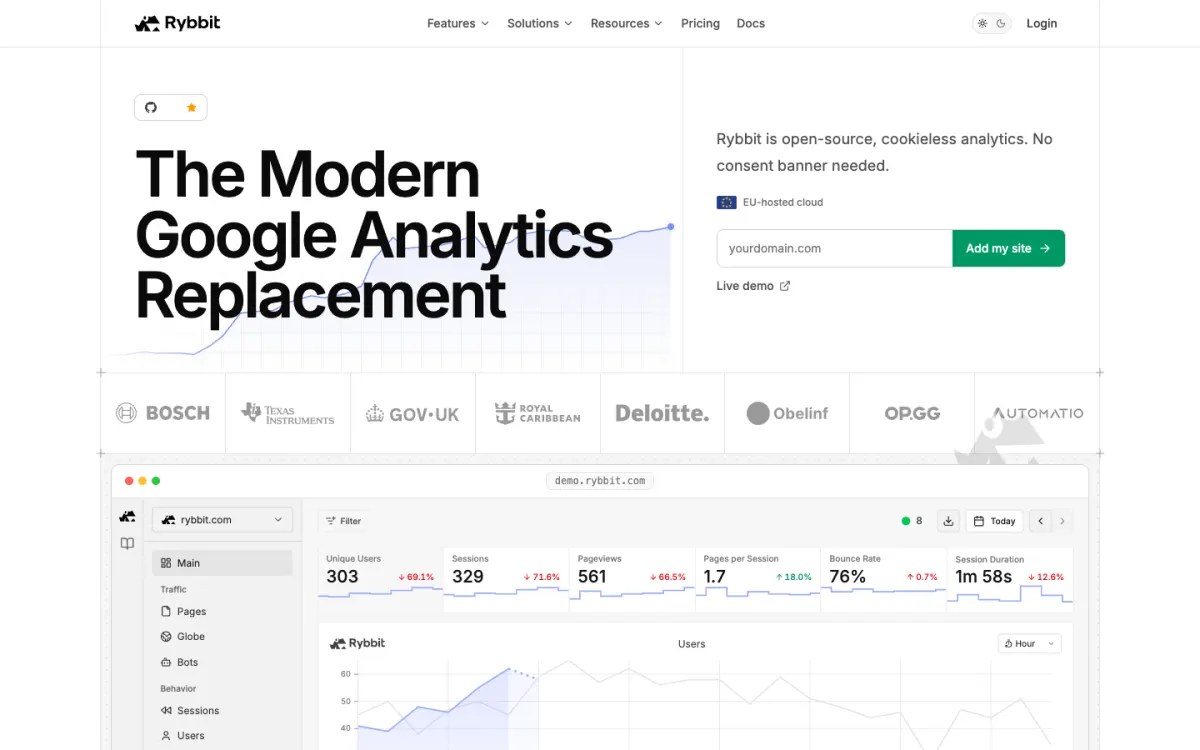
What it is. A newer open-source analytics tool with web analytics, funnels, user journeys, Web Vitals, and session replay. It’s grown quickly, to over 13,000 GitHub stars.
Self-hosting. It runs with Docker, and the current version is 2.9.2.
Hosted plan. Standard is $13 a month billed yearly for 100K pageviews and 5 sites, and Pro $26 a month yearly with replays and unlimited sites.
The catch. It’s young, and its script is about 12 KB compressed.
7. OpenPanel: product analytics on a budget
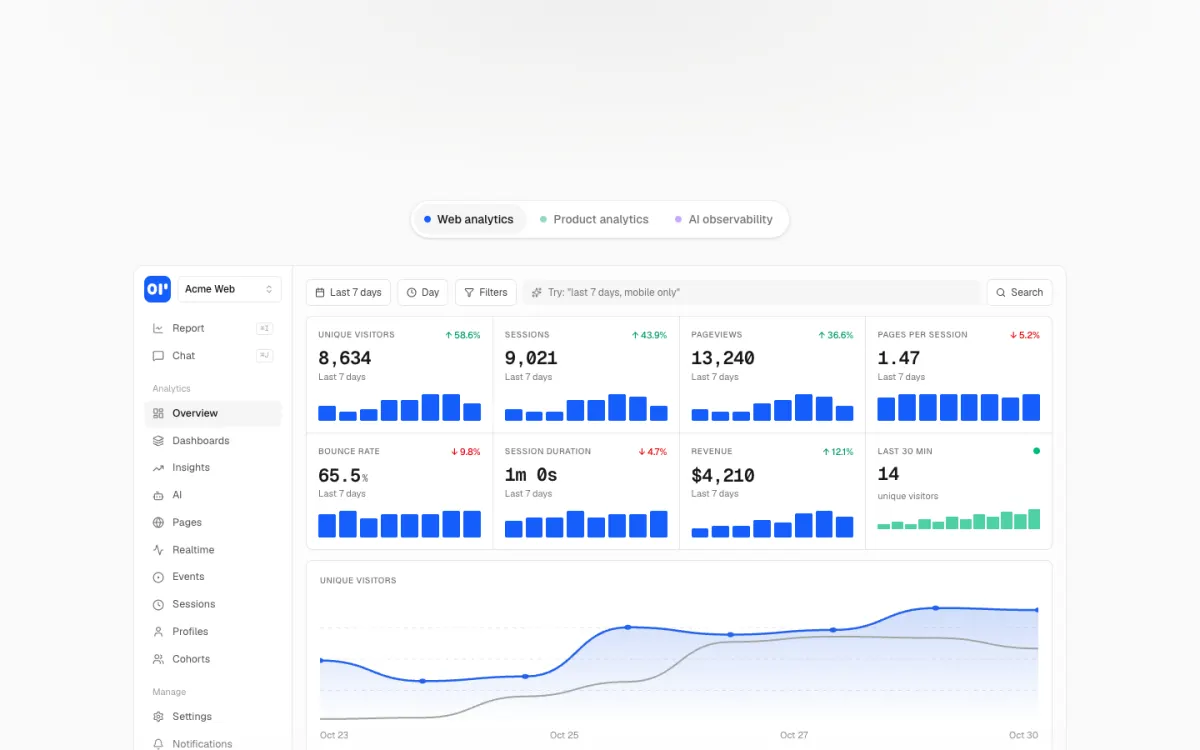
What it is. An open-source alternative to Mixpanel, with web analytics, events, funnels, retention, and user profiles.
Self-hosting. It runs with Docker under AGPLv3.
Hosted plan. From $2.50 a month.
The catch. A smaller project, and more aimed at product teams than at simple traffic stats.
8. GoatCounter: the smallest setup
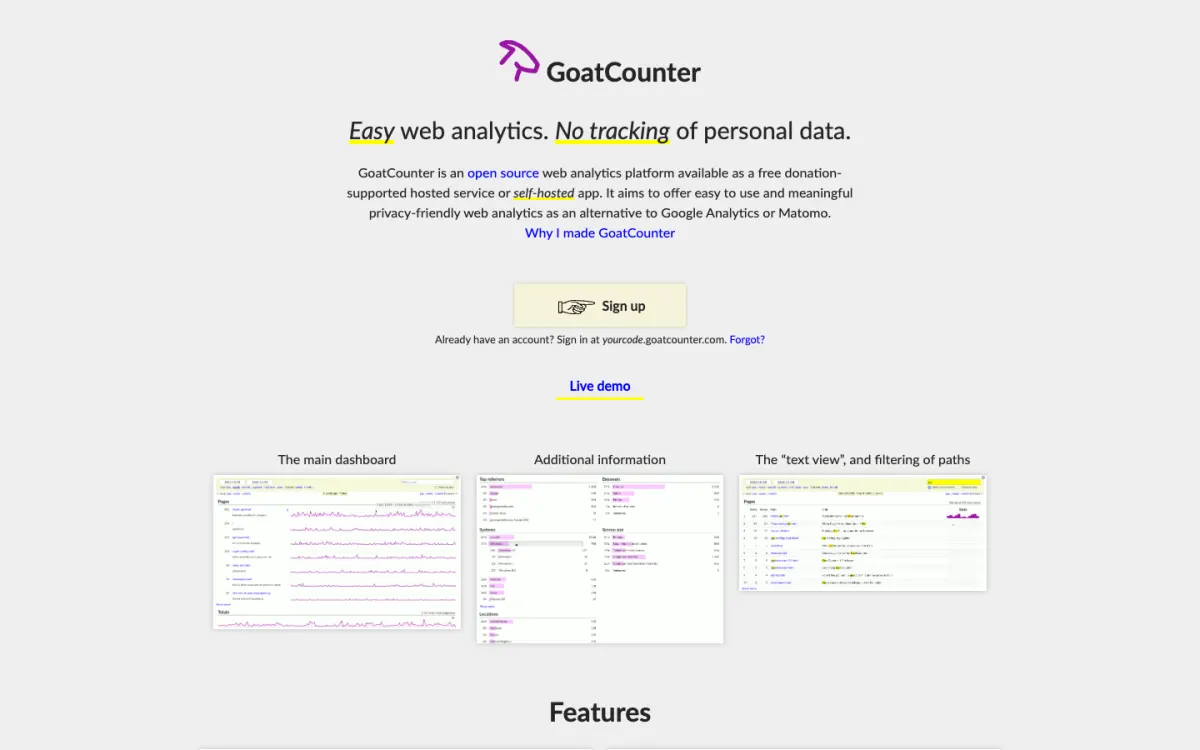
What it is. A small analytics tool run by one developer, with no unique visitor identifiers.
Self-hosting. It’s a single Go binary with SQLite or PostgreSQL, so there’s nothing else to install. The current version is 2.7.0, under the EUPL license.
Hosted plan. The hosted service is free for reasonable public use, funded by donations.
The catch. Basic reports, and no funnels or sessions.
9. Ackee: minimal self-hosted stats
What it is. A small, self-hosted analytics tool with a minimal dashboard and no cookies.
Self-hosting. It runs on Node.js with MongoDB, under the MIT license. The current version is 3.7.1.
Hosted plan. None.
The catch. It has the fewest features here, and it’s best for a developer who wants simple numbers for a few sites.
Which open-source analytics tool should you choose?
- You want the most features without cookies: Swetrix.
- You want the easiest self-hosting with a permissive license: Umami.
- You want the simplest dashboard: Plausible Community Edition, or Plausible’s cloud for funnels.
- You need a full Google Analytics replacement on PHP hosting: Matomo.
- You’re building a product and need replays and feature flags: PostHog or OpenPanel.
- You have a personal site and want something tiny: GoatCounter.
Self-hosting checklist
- Use a separate server from your website, so a traffic spike or outage on one doesn’t take down the other.
- Put it on a subdomain, such as
stats.example.com, with HTTPS. - Back up the database on a schedule, and test a restore.
- Watch for updates. Analytics tools receive security fixes like any other app.
- Monitor it. If the analytics server goes down, you lose data silently. An uptime monitor will tell you.
Adding any of these to a Bootstrap or static site is one script tag in your shared layout. For hosted options, see Google Analytics alternatives, Fathom Analytics alternatives, Simple Analytics alternatives, and our best web analytics tools.
FAQ
What is the best open-source web analytics tool?
Swetrix is the best overall: cookieless, AGPLv3, with funnels, sessions, error tracking, performance data, and session replay in the self-hosted Community Edition. Umami is the easiest to self-host, Plausible has the simplest dashboard, and Matomo has the most Google Analytics-style features.
Is there a free open-source alternative to Google Analytics?
Yes. Umami, Swetrix, Plausible Community Edition, Matomo, Rybbit, and GoatCounter are all free to self-host. You pay only for the server. Umami’s cloud Hobby plan and GoatCounter’s hosted service are also free if you’d rather not host anything.
Is Plausible open source?
Yes. Plausible is open source under AGPLv3, and the Community Edition can be self-hosted for free. It leaves out some cloud features, including funnels, user journeys, ecommerce revenue, and SSO.
Is Umami really free?
Yes. Umami is free to self-host under the MIT license, with every report included. Its cloud Hobby plan is also free for 100K events a month on one site, and Pro costs $20 a month.
What do I need to self-host web analytics?
A small server or VPS is enough for most tools: Umami needs Node.js and PostgreSQL, Plausible Community Edition needs Docker and 2 GB of RAM, Matomo needs PHP and MySQL, and GoatCounter is a single binary. PostHog is the exception, needing 4 vCPUs and 16 GB of RAM.
Do open-source analytics tools need a cookie banner?
Most don’t. Swetrix, Umami, Plausible, Rybbit, GoatCounter, and Ackee are cookieless and don’t store personal data. Matomo has a cookieless mode, while PostHog uses cookies by default. Check everything else on your site too, such as embedded videos and ad pixels.
Build your Bootstrap theme
Design a custom Bootstrap 5 theme visually with a live preview, then export clean Sass or CSS.
Open the Builder