Uptime Kuma Alternatives: 7 Hosted and Self-Hosted Tools
Uptime Kuma is the most popular self-hosted uptime monitor, with more than 93,000 GitHub stars: a free, MIT-licensed app that checks websites, APIs, ports, DNS, and Docker containers as often as every 20 seconds, sends alerts to more than 90 services, and serves status pages on your own domains. It’s also built on Bootstrap 5. People look for Uptime Kuma alternatives when running it becomes the problem: it can’t warn you when its own server goes down, it checks from one place, it has a single user account, and keeping it updated and backed up takes time. This guide covers seven alternatives, hosted and self-hosted, with pricing checked in November 2026.
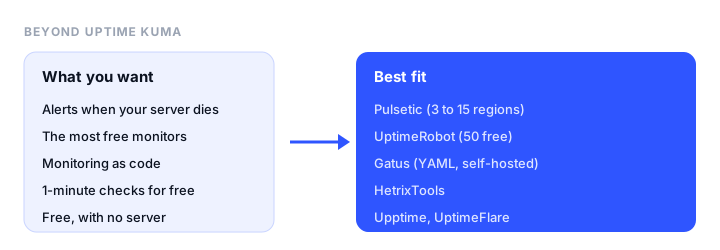
TL;DR
- Best overall: Pulsetic. Hosted monitoring from 3 to 15 regions, so it keeps working when your server doesn’t, with 3 free status pages on your own domain, SSL and domain checks, and SMS, call, Slack, and Teams alerts from $9 a month.
- Most free monitors: UptimeRobot, 50 hosted monitors for free.
- Best self-hosted alternative: Gatus, monitoring and a status page defined in one YAML file.
- Fastest free hosted checks: HetrixTools, 15 monitors checked every minute.
- Free with no server: Upptime on GitHub Actions or UptimeFlare on Cloudflare Workers.
What Uptime Kuma does well
- Free and unlimited. No monitor limits or plans, and the latest version, 2.5.11, was released in November 2026.
- Many monitor types: HTTP, keyword, JSON query, TCP, ping, DNS, WebSocket, push (for cron jobs), Docker containers, and game servers.
- Fast checks, as often as every 20 seconds.
- More than 90 notification services, including Telegram, Discord, Slack, email, Gotify, and Pushover.
- Multiple status pages, each mapped to its own domain.
Why look for an Uptime Kuma alternative?
- It can’t monitor itself. If the server, network, or Docker host running Uptime Kuma goes down, monitoring stops, and no alert goes out. Running it on the same server as your sites makes this worse.
- One location. Every check comes from the one place Uptime Kuma runs, so a network problem there looks like downtime everywhere, and you can’t see whether a site is down only in some regions.
- One user. There are no separate accounts or roles yet, so a team shares one login. Multi-user support is still an open feature request.
- Maintenance. You handle updates, security fixes, backups of its database, and the server itself. The November 2026 release, for example, fixed a security issue in an upstream package.
- SMS and calls need a provider. Text and phone alerts go through services you set up and pay for separately, such as Twilio.
Uptime Kuma alternatives at a glance
| Tool | Hosted or self-hosted | Free plan | Paid from | Status pages | Best for |
|---|---|---|---|---|---|
| Pulsetic | Hosted | 10 monitors, 3 regions, 3 status pages | $9/mo | Custom domain, free | Best overall |
| UptimeRobot | Hosted | 50 monitors, 5 min | €9/mo annual | 1 free; 3 on your domain on Solo | Most free monitors |
| Gatus | Self-hosted | Free (Apache-2.0) | Free | Yes | Config-as-code monitoring |
| HetrixTools | Hosted | 15 monitors, 1 min | $9.95/mo | Yes, custom domain | Fastest free hosted checks |
| Better Stack | Hosted | 10 monitors and heartbeats, 3 min | $29/mo per responder (yearly) | 1 free | On-call and incidents |
| Upptime / UptimeFlare | GitHub Actions / Cloudflare Workers | Free | Free | Yes | Free with no server |
| Healthchecks.io | Hosted or self-hosted | 20 cron jobs | Paid plans for more | No | Cron job monitoring |
The best Uptime Kuma alternatives, reviewed
1. Pulsetic: best overall Uptime Kuma alternative
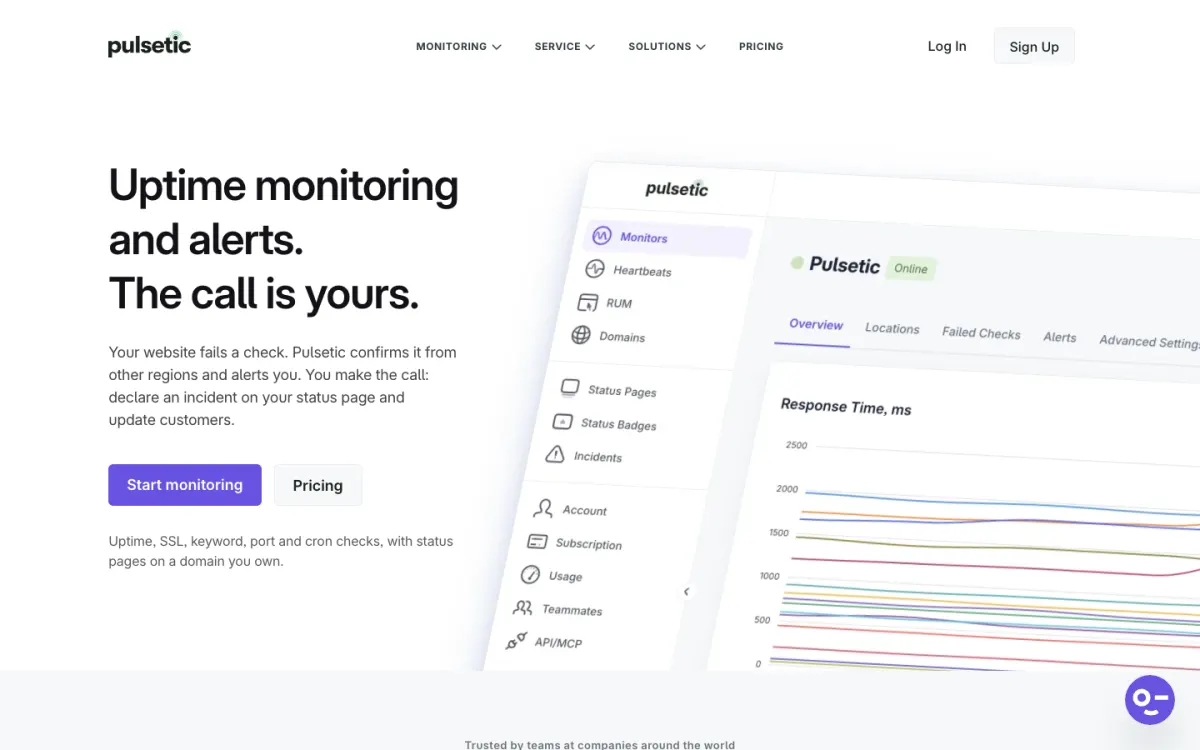
What it is. A hosted monitoring and status page platform with uptime, keyword, SSL, port, ping, cron heartbeat, and domain expiry monitors, dependency monitors for the services you rely on, AI browser monitors, real-user monitoring, and branded status pages.
Why it replaces Uptime Kuma. It solves the problems that come from self-hosting. Checks run from 3 regions on the free plan and up to 15 on paid plans, and each failure is confirmed from a second location before an alert goes out, so one bad network path doesn’t trigger a false alarm. Because Pulsetic runs on its own infrastructure, it still alerts you when your server is down. Status pages work like Uptime Kuma’s, on your own domain, and add incident updates, scheduled maintenance, subscriber notifications, and translations. SMS, phone call, and WhatsApp alerts are included in paid plans, with no separate provider to set up, and the Team and Organization plans include teammates with their own logins.
Pricing.
| Plan | Price | Monitors | Check interval | Status pages | Alerts included |
|---|---|---|---|---|---|
| Free | $0 | 10 | 5 min, 3 regions | 3, custom domain | Email, webhooks |
| Solo | $9/mo | 10+ | 60 sec, 5 regions | Unlimited | 30 SMS or calls, 15 WhatsApp, Slack, Teams, Discord, Telegram |
| Team | $19/mo | 50+ | 30 sec, 15 regions | Unlimited, white label | 100 SMS or calls, 50 WhatsApp, 2+ teammates |
| Organization | $49/mo | 300+ | 30 sec, 15 regions | Unlimited | 200 SMS or calls, 100 WhatsApp, 3+ teammates |
Extra monitors cost $0.20 each a month.
The catch. Uptime Kuma checks as often as every 20 seconds and is unlimited; Pulsetic’s fastest interval is 30 seconds, and monitors are counted.
2. UptimeRobot: most free monitors
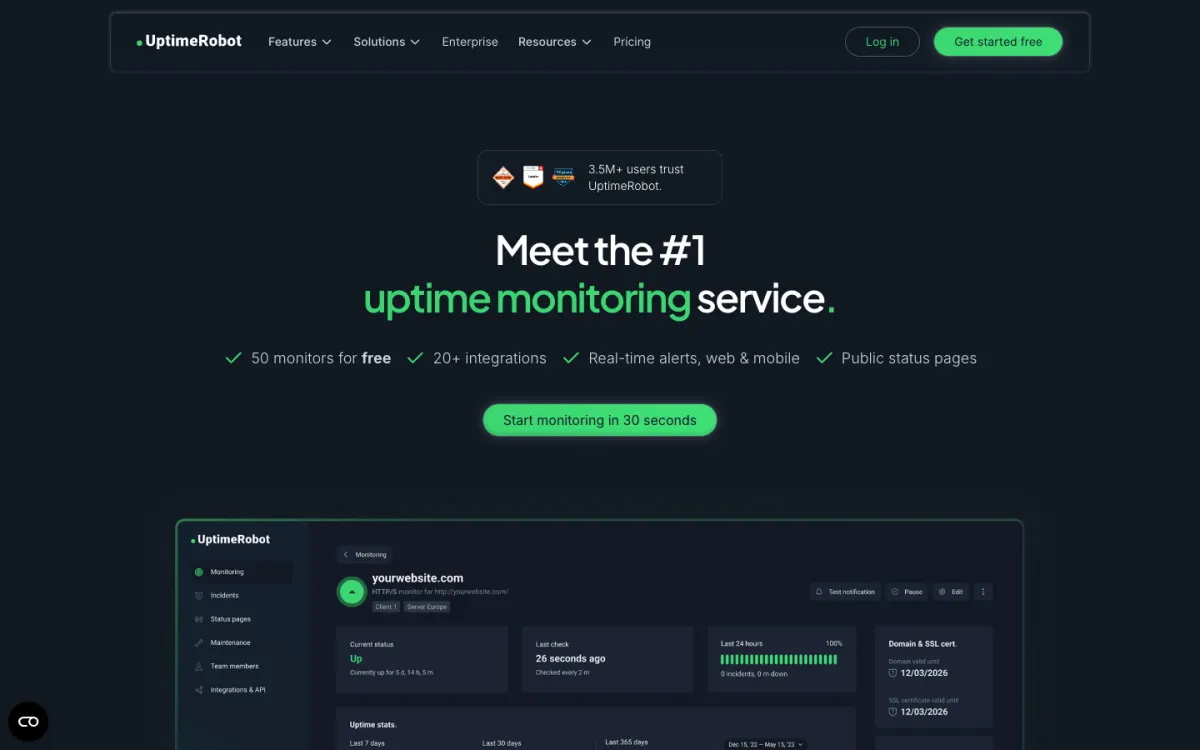
What it is. The most widely used hosted uptime monitor, with HTTP, keyword, ping, port, SSL, DNS, and cron checks and status pages.
Why it replaces Uptime Kuma. 50 hosted monitors for free, allowed for commercial use, with nothing to install or maintain.
Pricing. Solo is €9 a month billed annually for 10 monitors checked every 60 seconds, with SSL and DNS checks and 3 status pages on your own domain. Team is €35 a month annually for 100 monitors at 30-second intervals and 3 seats.
The catch. The free plan checks every 5 minutes, SSL and domain checks are paid, and SMS and voice alerts need purchased credits.
3. Gatus: best self-hosted alternative
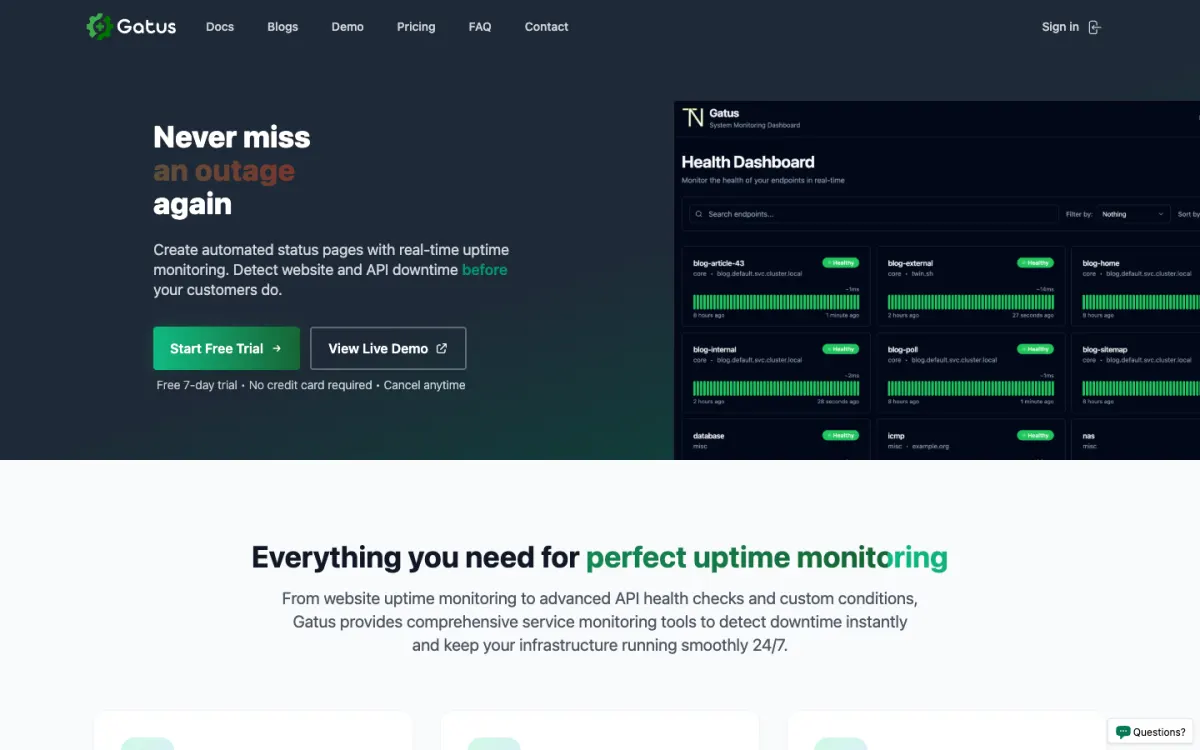
What it is. An open-source, Apache-2.0 health dashboard and status page. Every check is defined in one YAML file, with conditions on the status code, response time, response body, and certificate expiry.
Why it replaces Uptime Kuma. If you want to stay self-hosted, Gatus is the main alternative, and its config-as-code approach suits teams that manage infrastructure in Git: the monitoring config is reviewed and deployed like any other code, with no database of settings to back up.
Pricing. Free. You pay for the server.
The catch. Everything is set in YAML, with no point-and-click editor, and it shares Uptime Kuma’s self-hosting drawbacks: one location, and no alerts if its own server goes down.
4. HetrixTools: fastest free hosted checks
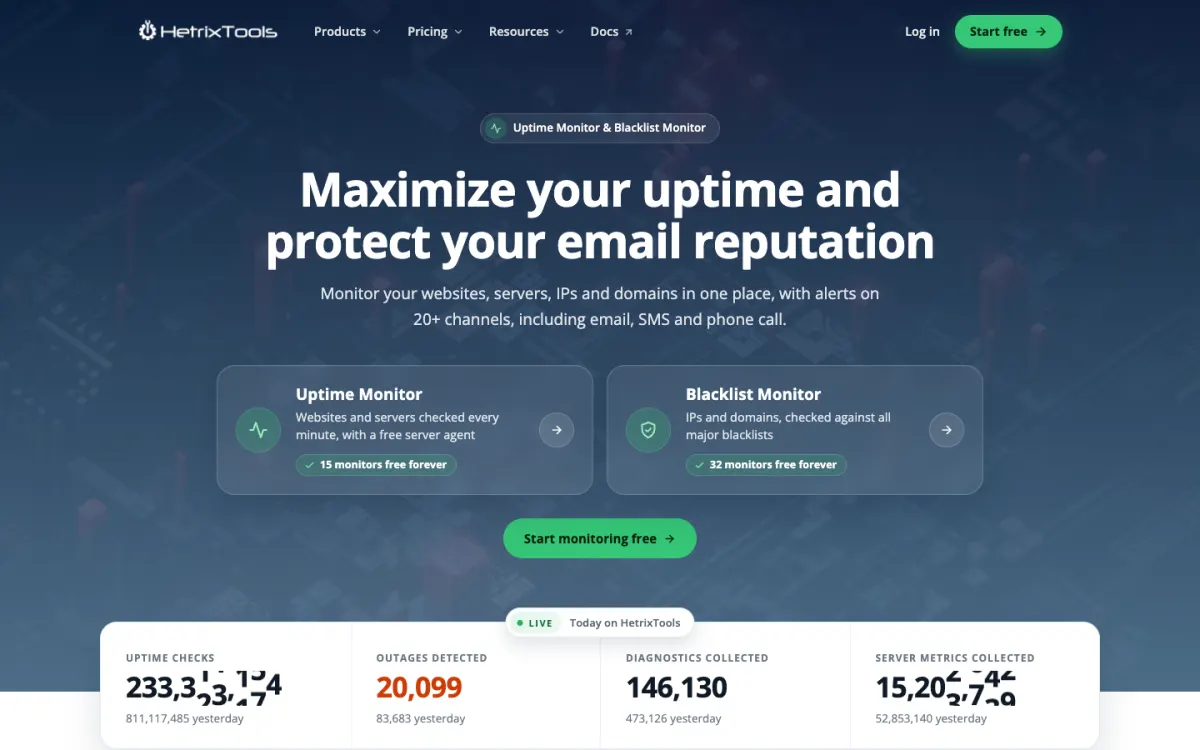
What it is. Hosted uptime and server monitoring, with SSL and domain expiry checks, status pages on your domain, and email blacklist monitoring.
Why it replaces Uptime Kuma. One-minute checks from 4 of 12 locations on the free plan, with 15 monitors and 15 server agents, and every alert channel included.
Pricing. Free for 15 monitors. Professional is $9.95 a month for 30, Business $19.95 for 60, and Enterprise $49.95 for 200.
The catch. Free accounts must log in at least once every 90 days to stay active.
5. Better Stack: monitoring with on-call
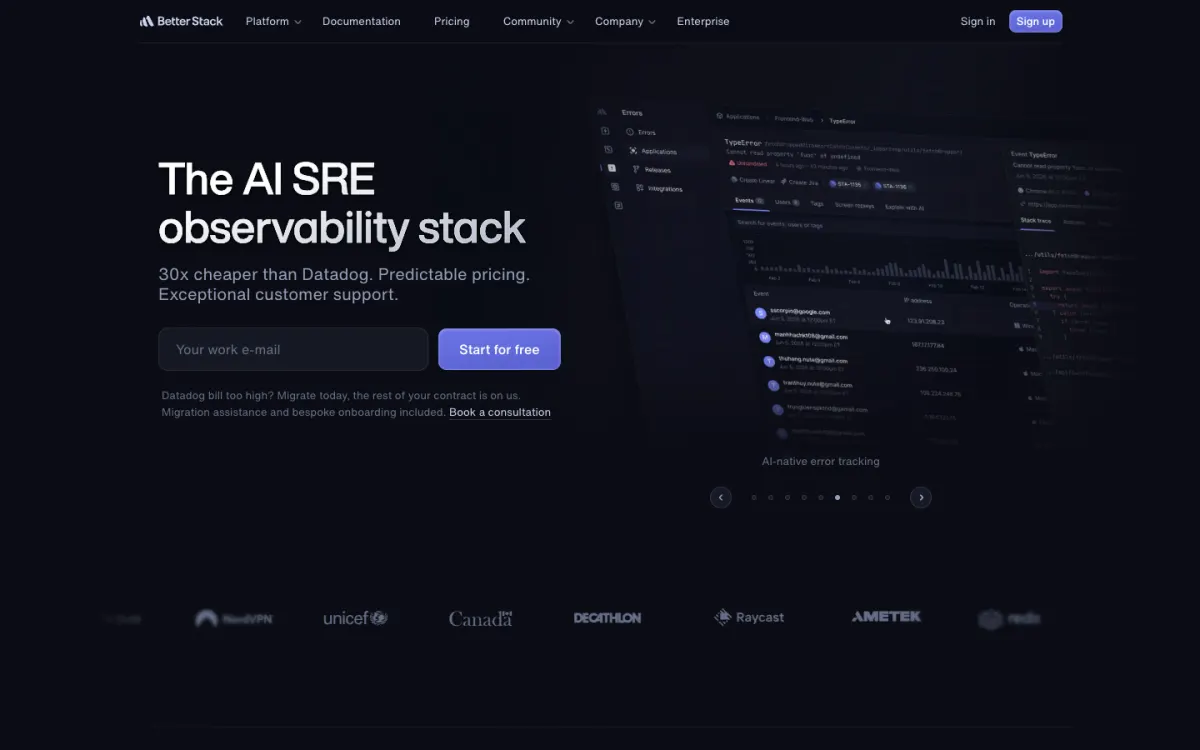
What it is. A platform with uptime monitoring, heartbeats, status pages, on-call scheduling, incident management, and logs.
Why it replaces Uptime Kuma. For teams that need on-call rotations and unlimited phone and SMS alerts along with monitoring, with checks as often as every 30 seconds.
Pricing. The free plan, for personal projects, includes 10 monitors and heartbeats combined, checked every 3 minutes, and one status page. A Responder license is $29 a month per responder billed yearly, or $34 monthly.
The catch. Per-responder pricing adds up, and extra status pages cost $12 to $15 a month each. See our Better Stack alternatives.
6. Upptime and UptimeFlare: free with no server
What they are. Two open-source projects that run on infrastructure you already have:
- Upptime uses GitHub Actions to check your sites every 5 minutes, opens a GitHub issue when one goes down, and publishes a status page on GitHub Pages.
- UptimeFlare runs on Cloudflare Workers, with up to 50 checks every minute, webhook alerts, and a status page on your domain.
Why they replace Uptime Kuma. No server to run or patch, and the checks don’t depend on your own hosting.
Pricing. Free.
The catch. You maintain the configuration yourself, and reliability depends on GitHub’s or Cloudflare’s free tiers.
7. Healthchecks.io: for cron job monitoring
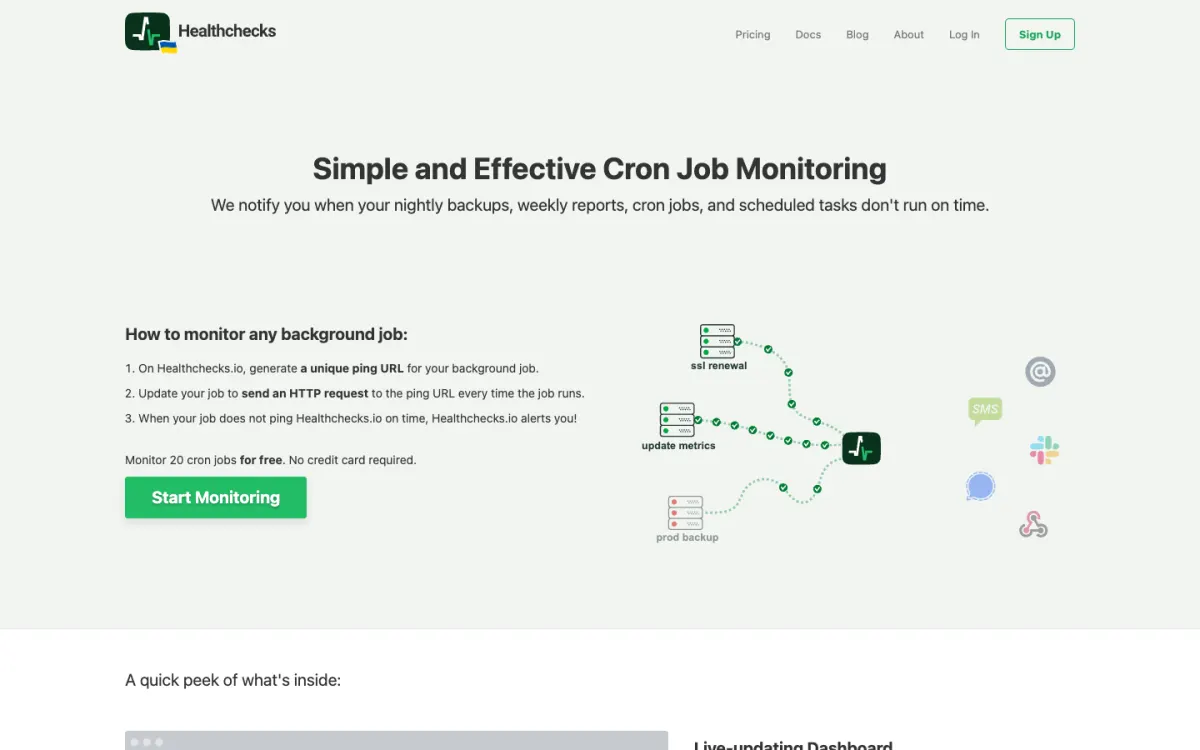
What it is. A service that alerts you when a scheduled job, such as a backup or report, doesn’t check in on time. It’s open source and can be self-hosted too.
Why it replaces Uptime Kuma. If you use Uptime Kuma’s push monitors for cron jobs, Healthchecks.io does that one job in more depth, with cron schedule parsing, grace periods, and a free plan for 20 jobs.
Pricing. Free for 20 jobs on the hosted service, or free to self-host.
The catch. It only monitors jobs, not websites. Our cron job monitoring guide covers the options.
Should you keep Uptime Kuma?
Uptime Kuma is still a great tool. Many teams keep it for internal services, such as databases, Docker containers, and private APIs that a hosted monitor can’t reach, and add a hosted monitor for public websites. That pairing covers both sides: Uptime Kuma watches the inside, and a service like Pulsetic watches from outside and alerts you even when your own server is down.
If you do keep it, run it on a different server, ideally with a different provider, from the sites it watches, and back up its data folder.
For more options, see our free uptime monitoring and best website monitoring tools guides.
FAQ
What is the best alternative to Uptime Kuma?
Pulsetic is the best overall alternative: a hosted monitor that checks from several regions and keeps alerting when your own server is down, with 3 free status pages on your own domain and SMS and call alerts from $9 a month. Gatus is the best self-hosted alternative, and UptimeRobot has the most free hosted monitors.
Is Uptime Kuma free?
Yes. Uptime Kuma is free and open source under the MIT license, with unlimited monitors and status pages. You pay only for the server it runs on, and for SMS or call providers if you use them.
What is the main downside of Uptime Kuma?
It runs on your own server, so if that server or its network goes down, monitoring stops and no alert is sent. It also checks from a single location, has one user account, and needs you to handle updates and backups.
Is there a hosted version of Uptime Kuma?
Uptime Kuma has no official hosted service. Hosted monitors such as Pulsetic, UptimeRobot, and HetrixTools offer the same kind of checks and status pages without a server to run.
Can Uptime Kuma check from multiple locations?
Not by itself. Each Uptime Kuma instance checks from where it runs. To check from several locations, run several instances or use a hosted monitor that checks from multiple regions, such as Pulsetic, with up to 15 regions on paid plans.
Does Uptime Kuma support multiple users?
Not yet. Uptime Kuma has a single user account, and multi-user support with roles is an open feature request. Hosted tools such as Pulsetic, UptimeRobot, and Better Stack include team accounts.
Build your Bootstrap theme
Design a custom Bootstrap 5 theme visually with a live preview, then export clean Sass or CSS.
Open the Builder