9 Best Lovable Alternatives in 2026 (Free and Paid)
Lovable turns a description into a working web app, with a backend, hosting, and GitHub sync, and for many people it is the first AI builder they try. The usual reasons they look elsewhere are cost and fit rather than capability. Every change is paid for in credits, the free plan now publishes only to people you invite, and a lot of what gets built on Lovable turns out to be a website that would be easier to edit by hand than by prompt.
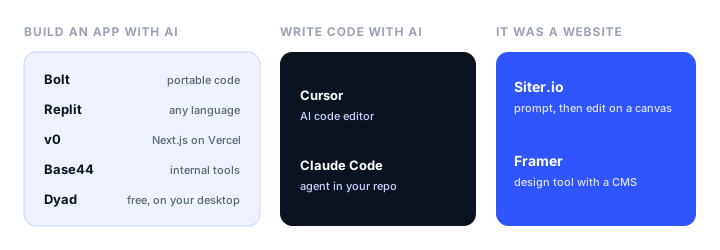
So the right alternative depends on what you are making. This guide covers AI app builders that do the same job differently, coding tools for people who would rather own the editor, and website builders for projects that were really a website all along. Prices are from each vendor’s own pricing page or documentation in November 2026, in US dollars.
The short version:
- Best overall Lovable alternative: Bolt, with ZIP and GitHub export and unused tokens that roll over.
- Best if you built a website, not an app: Siter.io, which drafts the site with AI and lets you edit everything by hand.
- Best for apps in any language: Replit, with an agent, an IDE, a database, and hosting in one place.
- Best for Next.js developers: v0, which writes into your GitHub repository.
- Best for internal tools: Base44, with a fully managed backend.
- Best free Lovable alternative: Dyad, an open-source desktop app that uses your own AI keys.
- Best for a designed site with a CMS: Framer.
- Best AI code editor: Cursor.
- Best for an AI agent in your own codebase: Claude Code.
Why people look for a Lovable alternative
- You pay for every change. Lovable charges credits by how complex each change is; its own examples run from 0.50 credits to make a button gray to 2.00 for a landing page with images. A project you keep adjusting keeps drawing on the balance, and monthly plan credits expire 2 months after they are issued.
- The free plan no longer publishes publicly. Free projects can be published to invited people only, up to 10 per project, with a Lovable badge you can’t remove. A public site on your own domain starts at Pro.
- Design by prompt. You describe what you want and refine what comes back. That suits an app, but on a marketing site, moving a button or changing a gap becomes another prompt.
- It is a codebase. Owning the code is the upside, and also the commitment: since May 2026, new projects use TanStack Start with server-side rendering, so the result is an application someone has to keep running, not static pages you can drop on any host.
Lovable is still a strong choice if you are building software: something with accounts, data, and logic. It includes Lovable Cloud as a backend (database, auth, storage, and functions), unlimited members on every plan, and GitHub, GitLab, and Bitbucket sync even on the free plan, so your code is never stuck.
Lovable alternatives at a glance
| Tool | Best for | Free plan | Paid from | Hosting included | Code export |
|---|---|---|---|---|---|
| Bolt | Portable code | 1M tokens a month, Bolt branding | $25/mo ($18 yearly) | Yes, bolt.host | ZIP and GitHub |
| Siter.io | A website you edit by hand | 1 website, 3 pages | $7/mo yearly | Yes | HTML per page on Pro |
| Replit | Apps in any language | 1 app, link expires after 30 days | $20/mo ($18 yearly) | Yes | Download and GitHub |
| v0 | Next.js developers | 7 messages a day | $30 per user/mo | On Vercel | GitHub, free |
| Base44 | Internal tools | 25 message credits a month, 5 apps | $16/mo yearly | Yes | GitHub from Builder ($40/mo) |
| Dyad | Free, local building | Yes, with your own AI keys | $20/mo for Pro credits | No, deploy to Vercel or your own | Your own files |
| Framer | Designed sites with a CMS | framer.website address | $10/mo per site, yearly | Yes | No |
| Cursor | Editing code with AI | Limited | $8/mo (Grok models only) | No | Your own files |
| Claude Code | An agent in your repo | No | Claude Pro, $20/mo | No | Your own files |
| Lovable, for comparison | 5 credits a day (up to 30 a month), invited viewers only | $25/mo ($21 yearly) | Yes, lovable.app | GitHub on all plans, download from Pro |
1. Bolt: best overall Lovable alternative
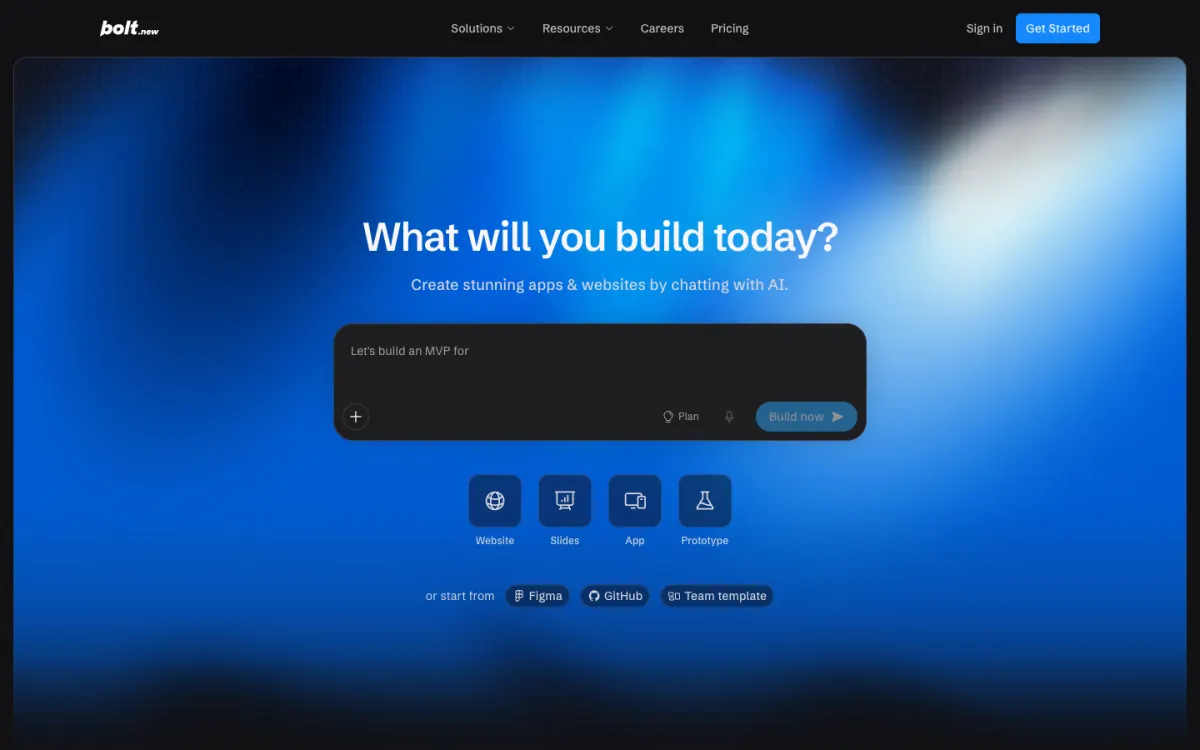
What it is. Bolt builds full-stack JavaScript apps from a conversation. The app runs in your browser tab inside a WebContainer, with hosting on bolt.host and a built-in database.
Why switch from Lovable. Bolt works the same way, prompt in and app out, with a cleaner exit: ZIP download and two-way GitHub sync, and because WebContainers run only JavaScript and WebAssembly, the code can’t depend on anything exotic. Pricing is in tokens rather than credits per change, and unused tokens roll over on Pro. It is also cheaper on a yearly plan, $18 a month against Lovable’s $21.
What to know. It is JavaScript only. The free plan carries Bolt branding and hosting stops at 333,000 requests a month. If you use Bolt’s database, the documented export is per table as CSV or JSON.
Pricing. Free: 300,000 tokens a day, 1M a month. Pro $25/mo or $18/mo billed yearly, from 10M tokens a month with rollover, a custom domain, and no branding. Teams $30 per member/mo ($27 yearly).
2. Siter.io: best if you built a website, not an app
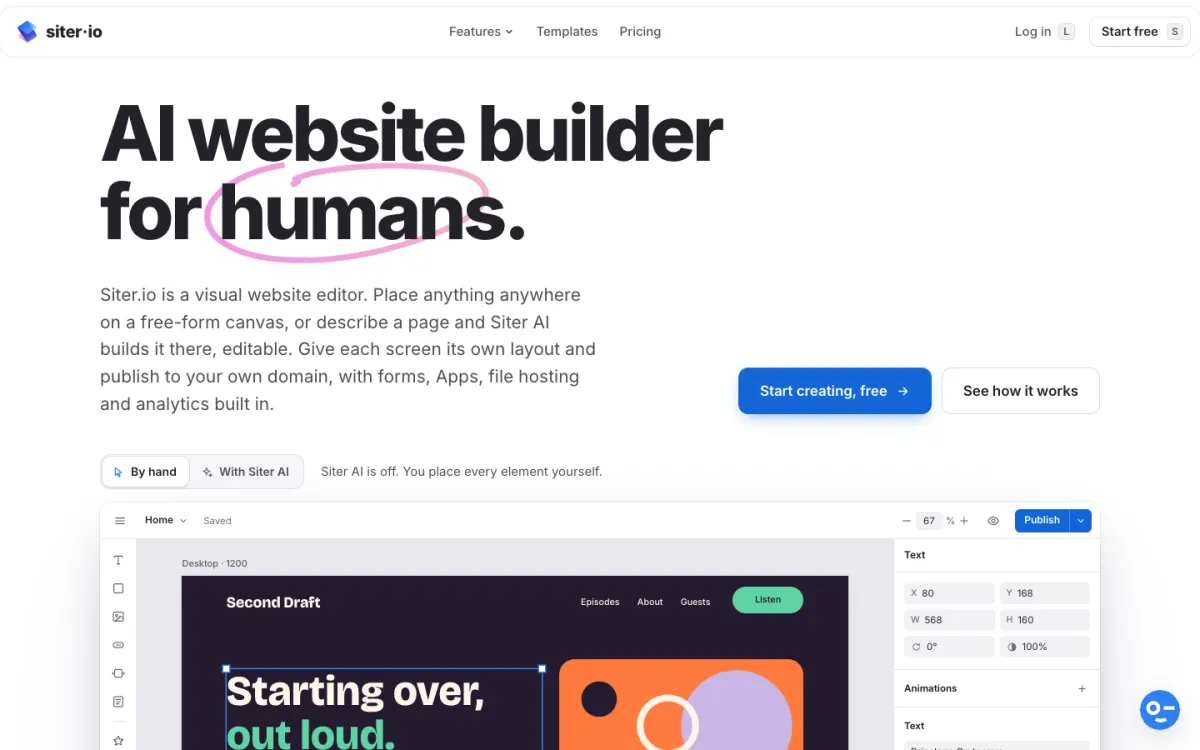
What it is. Siter.io is a visual website builder. Siter AI lays out a site from a description, for desktop, tablet, and phone, and everything it makes is ordinary elements on a free-form canvas that you can move, resize, and restyle by hand.
Why switch from Lovable. Many Lovable projects are a landing page, a portfolio, or a company site. For those, Siter.io gives you the same start from a prompt, and then the next change is a drag, not another prompt and more credits. Hosting, SSL, forms, and cookieless analytics are included, there is nothing to maintain, and you can also bring the design in from Figma on every plan. Siter Apps builds small tools such as calculators, quizzes, and booking request forms from a description.
What to know. It makes websites and nothing else: no back end, no user accounts, no database, no store, and no blog or CMS. Code export is an HTML download of one page at a time on the Pro plan, not a full-site export. Editor seats are counted per website, 2 on Solo. There is no Lovable importer, since a Lovable project is code, so the pages are made again, usually with Siter AI doing the first pass.
Pricing. Free publishes 1 website on a getsiter.com address with 3 pages, 1 form, a Siter badge, and 100 AI credits once. Solo $7/mo billed yearly ($8 monthly) adds your own domain, 10 pages, and 600 AI credits a month.
3. Replit: best for apps in any language
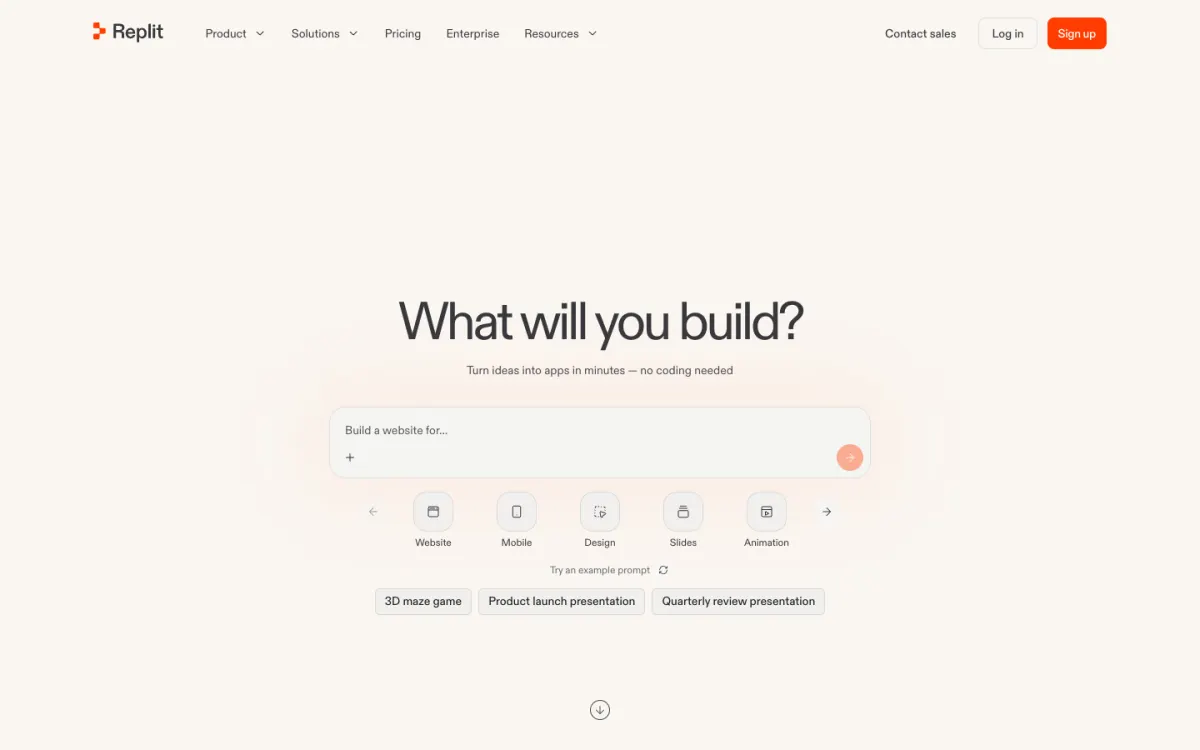
What it is. Replit combines an AI agent that builds apps from a description with a browser IDE for almost any language, a Postgres database, and hosting.
Why switch from Lovable. Replit does more than generate a JavaScript web app: Python, a backend API, scheduled jobs, and a database can live in one project, and you can open the code and edit it in the same place at any time. Its Pro plan covers up to 15 builders with no per-seat fees.
What to know. Replit Agent uses effort-based pricing, charged per checkpoint, so the cost of a change is no easier to predict than on Lovable. The free Starter plan publishes one app whose link goes down after 30 days, with a “Made with Replit” badge. Apps built on Replit Auth and Replit’s own config take work to move; our Replit alternatives guide covers the details.
Pricing. Starter free. Core $20/mo ($18/mo billed yearly) with $20 of monthly credit. Pro $100/mo ($90 yearly) for up to 15 builders with $100 of credit.
4. v0: best for Next.js developers
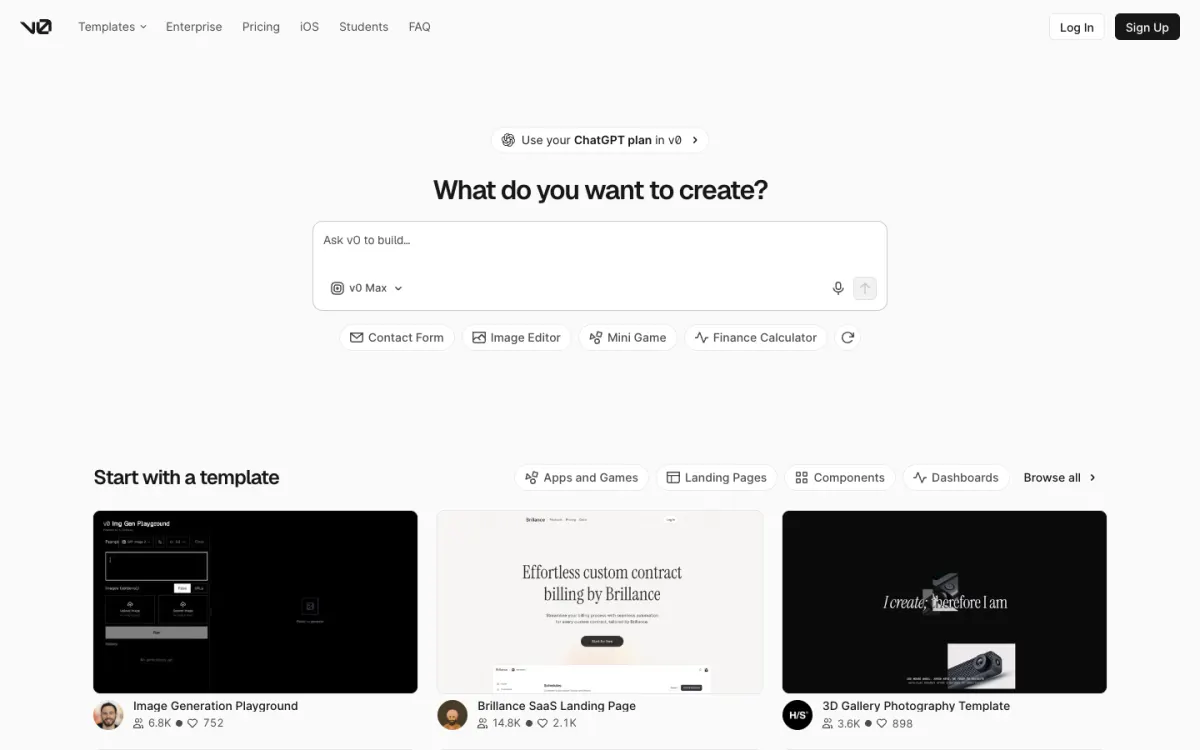
What it is. v0 is Vercel’s AI builder. It writes Next.js with TypeScript, Tailwind, and shadcn/ui, and every chat works as a branch in your GitHub repository.
Why switch from Lovable. For a developer, v0 keeps the code in your repository from the first prompt, with real commits and pull requests, deployed on Vercel. Billing is per token with published rates for each model.
What to know. It generates Next.js whether your project needs it or not. There is no managed backend of Lovable’s kind; you connect a database from Vercel’s marketplace. Vercel’s free Hobby plan forbids commercial use, so client work needs a paid Vercel plan.
Pricing. Free: 7 messages a day, with $5 of one-time credit for new users. Plus $30 per user/mo with $30 of monthly credit. Business $100 per user/mo.
5. Base44: best for internal tools
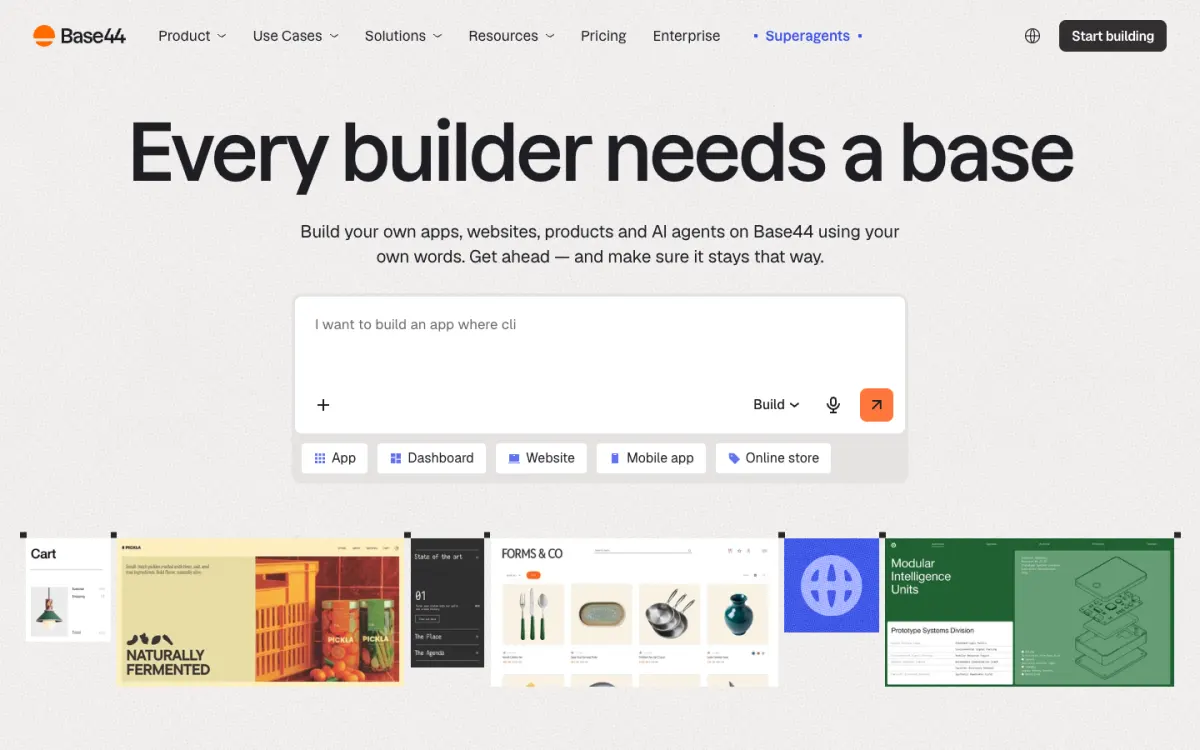
What it is. Base44, owned by Wix, builds full-stack apps on a completely managed backend: database, auth, file storage, and built-in integrations for email and AI.
Why switch from Lovable. There is even less to set up than on Lovable, which makes it a fast path to an internal tool, a client portal, or a small SaaS that works end to end.
What to know. The lock-in is tighter than Lovable’s: the backend can’t be self-hosted, so even exported code still calls Base44, and GitHub sync starts on the Builder plan rather than on the free plan.
Pricing (billed yearly; monthly billing costs more). Free: 25 message credits a month, up to 5 apps. Starter $16/mo (100 message credits, custom domain). Builder $40/mo (250 credits, GitHub sync). Pro $80, Elite $160.
6. Dyad: best free Lovable alternative
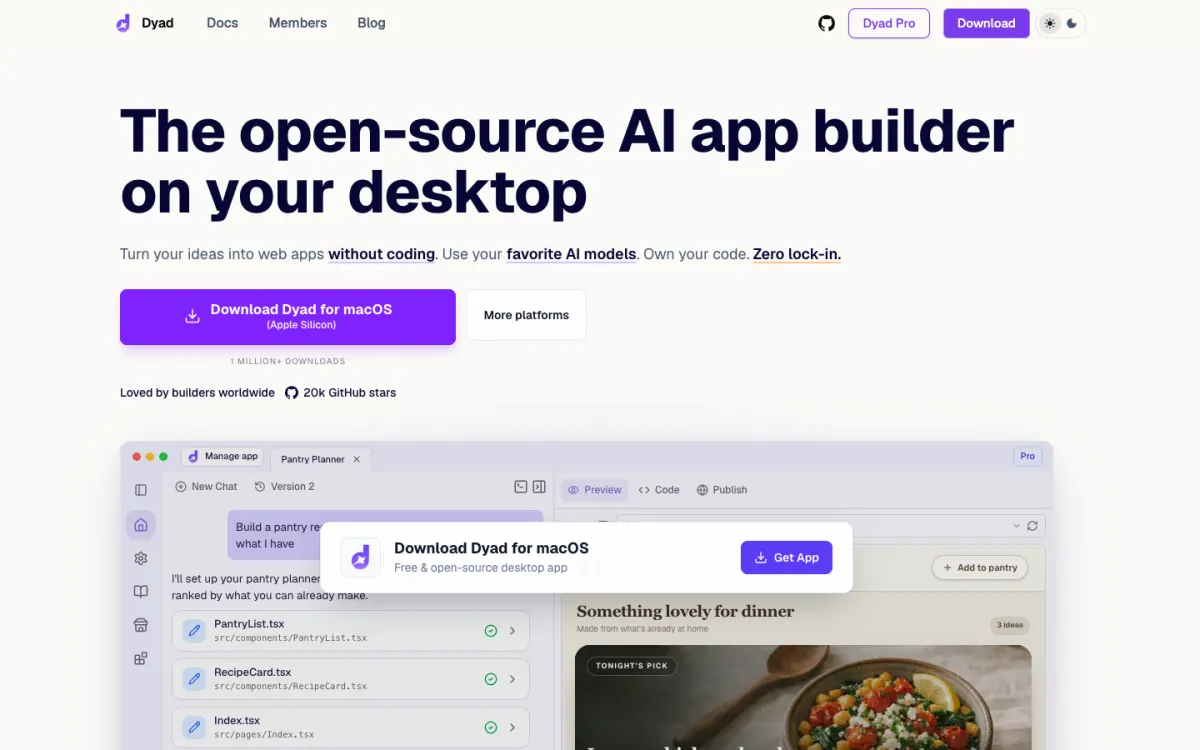
What it is. Dyad is an open-source AI app builder that runs as a desktop app on macOS, Windows, and Linux. It works like Lovable, a chat on one side and a live preview on the other, but the project files sit on your own disk.
Why switch from Lovable. Dyad is free, and you bring your own API key for the AI model you prefer, or run a local model through Ollama or LM Studio. You pay your AI provider directly, with no credits in between, and there is no platform to leave: the code is already yours.
What to know. It is a tool, not a platform: there is no hosting, so you deploy to Vercel, connect Supabase or Neon for a database and auth, or use your own setup. With your own key, you also pay for every token your model uses, so watch your provider’s usage page.
Pricing. Free with your own keys. Pro $20/mo with 200 AI credits and extra modes for large codebases. Max $79/mo with 900 credits.
7. Framer: best for a designed site with a CMS
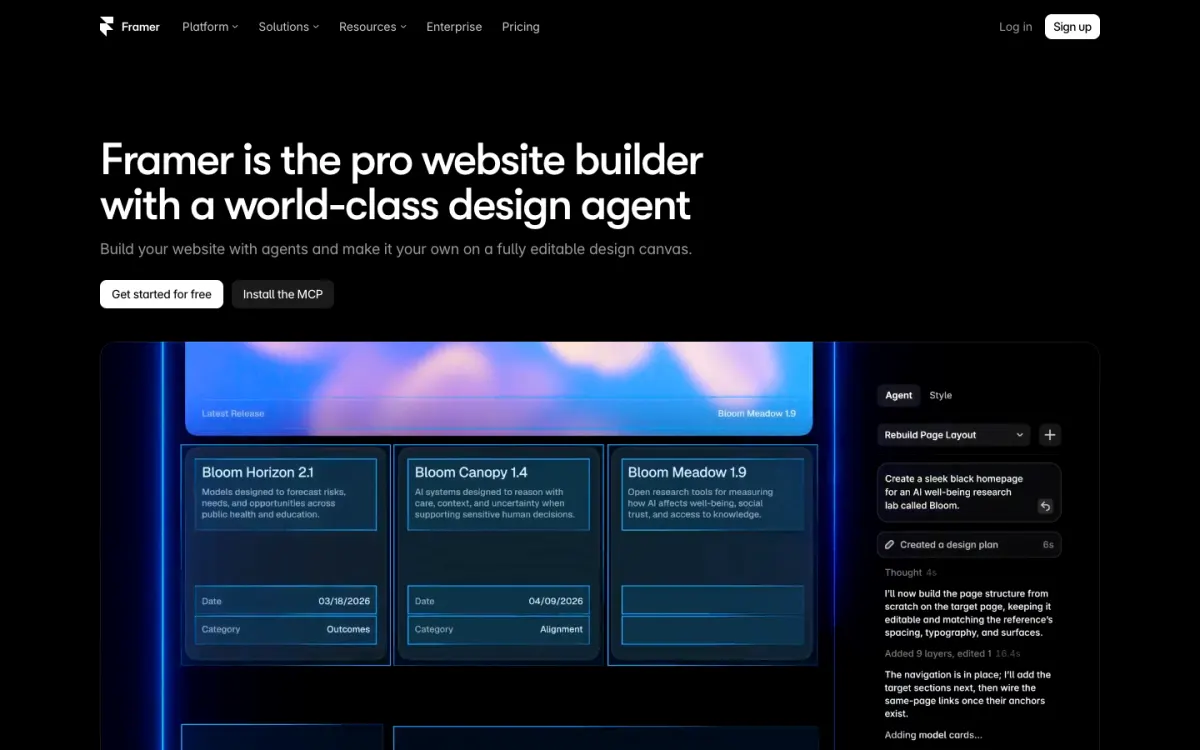
What it is. Framer is a design-first website builder that works like a design tool, with a CMS, motion built in, and AI that generates and edits pages on the canvas.
Why switch from Lovable. If the Lovable project is a marketing site or a portfolio, Framer gives you a visual canvas, polished animation, and a CMS for a blog or case studies, with hosting included.
What to know. Framer prices per site, and editor seats are billed on top. AI credits are metered. There is no code export for self-hosting, and it doesn’t build apps with accounts or a database.
Pricing. Free publishes on a framer.website address with a Framer banner. Basic $10/mo per site billed yearly adds a custom domain and 1,000 AI credits a month. Pro $30/mo adds more CMS room and 3,000 credits.
8. Cursor: best AI code editor
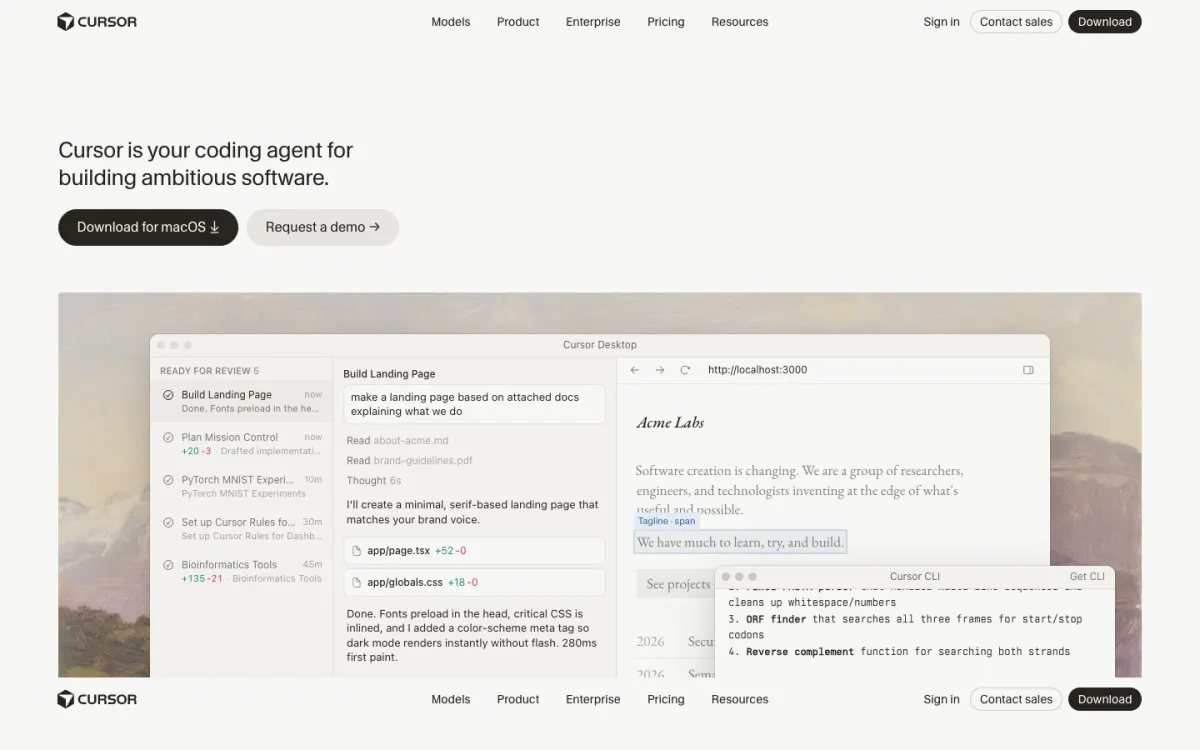
What it is. Cursor is a desktop code editor built around an AI agent that plans, edits, and runs changes across your project.
Why switch from Lovable. If you already sync your Lovable project to GitHub, you can clone it and keep working in Cursor, with an agent that edits real files under real git and nothing tying the project to a platform.
What to know. Cursor’s plans are now sold through X Subscription; the usage pool is shared with Grok, and other models such as Claude and GPT are billed separately at API prices. There is no hosting and no backend, so you deploy elsewhere.
Pricing. Free (limited). Plus $8/mo (Grok models only). Premium $30/mo, Super $100/mo, Ultra $200/mo. Teams from $30 per seat.
9. Claude Code: best for an AI agent in your own codebase
What it is. Claude Code is Anthropic’s coding agent, which works on your own files and repository from the terminal or an editor, and is included with Claude’s paid plans.
Why switch from Lovable. It is the natural next step for a Lovable project that has outgrown prompting in a browser: the same kind of conversation, but on ordinary source files and ordinary git, with a flat subscription instead of credits per change. Our guide to where to host Claude apps covers getting the result online.
What to know. There is no hosting and no database; you bring your own. Usage limits depend on the plan.
Pricing. Claude Pro $20/mo ($17/mo billed yearly), which includes Claude Code. Max from $100/mo.
Is there a free alternative to Lovable?
Yes, with limits on each:
- Dyad is free and open source; you pay only for the AI model you connect, or nothing with a local model.
- Bolt gives 1M tokens a month free, with public hosting on bolt.host and Bolt branding.
- Siter.io publishes one website free on a getsiter.com address, if what you need is a site.
- Base44 gives 25 message credits a month and up to 5 apps.
- v0 gives 7 messages a day and deploys to Vercel’s free Hobby plan, which is for non-commercial use.
Lovable’s own free plan still works for building and for sharing with up to 10 invited people per project, with GitHub sync, so you can keep the code wherever you go next.
Moving a project off Lovable
Lovable makes leaving easier than most builders:
- Connect GitHub (or GitLab or Bitbucket), which works on every plan. The full codebase is pushed to your repository and stays in sync.
- Open it in your next tool. Bolt, v0, Dyad, Cursor, and Claude Code can all work from a GitHub repository.
- Plan for the backend. If the app uses Lovable Cloud for its database, auth, and storage, those need a new home. Supabase is the closest match, since it is what Lovable Cloud runs on.
- Pick a host that runs server code. New Lovable projects use TanStack Start with server-side rendering, so they need a host that runs Node, such as the platforms in our Render alternatives guide.
If the project is really a website, rebuilding the pages in a website builder is often less work than keeping a codebase running. And if it builds to plain HTML, CSS, and JavaScript, a static host is the cheapest home: Static.app publishes a ZIP or folder on its own address or your domain. Our guide to hosting an AI-generated website walks through each builder’s export.
How to choose
- You want the same experience with code you can take anywhere: Bolt.
- What you built is a website, and you want to edit it by hand: Siter.io.
- You need Python, background jobs, or more than a JavaScript web app: Replit.
- You work in Next.js and Vercel: v0.
- You want an internal tool with no setup at all: Base44.
- You want to pay nothing but your AI provider: Dyad.
- You want a designed marketing site with a blog or case studies: Framer.
- You are ready to work on the code directly: Cursor or Claude Code.
- You are building an app with accounts and data, and the credits are fine: stay on Lovable, and keep GitHub sync on.
For a wider look at prompt-to-site tools, see our comparisons of the best AI website builders and free AI website builders.
FAQ
What is the best alternative to Lovable?
Bolt is the best overall alternative to Lovable for building apps with AI, because it works the same way and gives you ZIP and GitHub export with rollover tokens. If what you built on Lovable is really a website, Siter.io is a better fit, since you can edit the AI draft by hand. Developers often move to Cursor or Claude Code instead.
Is there a free alternative to Lovable?
Dyad is the best free alternative to Lovable: an open-source desktop app that uses your own AI API keys or a local model. Bolt, Base44, and v0 also have free plans with monthly or daily limits.
Is Lovable free?
Lovable has a free plan with 5 build credits a day, up to 30 a month, and GitHub sync. Free projects can be published only to invited people, up to 10 per project, with a Lovable badge. A custom domain, code download, and badge removal start on Pro, $25 a month or $21 a month billed yearly.
Is Bolt better than Lovable?
Bolt is better if you want portable code and predictable usage, with ZIP export, GitHub sync, and tokens that roll over. Lovable is better if you want a managed backend for accounts, data, and storage set up for you, and unlimited members on every plan.
Is Replit better than Lovable?
Replit is better for apps that need more than a JavaScript web app, such as Python, background jobs, or a backend API, because it runs almost any language and includes an IDE. Lovable is easier for non-developers building a web app from a description.
Can I export my code from Lovable?
Yes. GitHub, GitLab, and Bitbucket sync work on every Lovable plan, including free, and paid plans can also download the codebase. If the app uses Lovable Cloud, you will need to move the database, auth, and storage to another backend, such as Supabase.
What should I use instead of Lovable for a website?
Use a website builder rather than an app builder. Siter.io drafts the site with AI and lets you edit every element by hand, with hosting, forms, and analytics included, from $7 a month billed yearly. Framer is a good choice if you need a CMS for a blog or case studies.
Build your Bootstrap theme
Design a custom Bootstrap 5 theme visually with a live preview, then export clean Sass or CSS.
Open the Builder